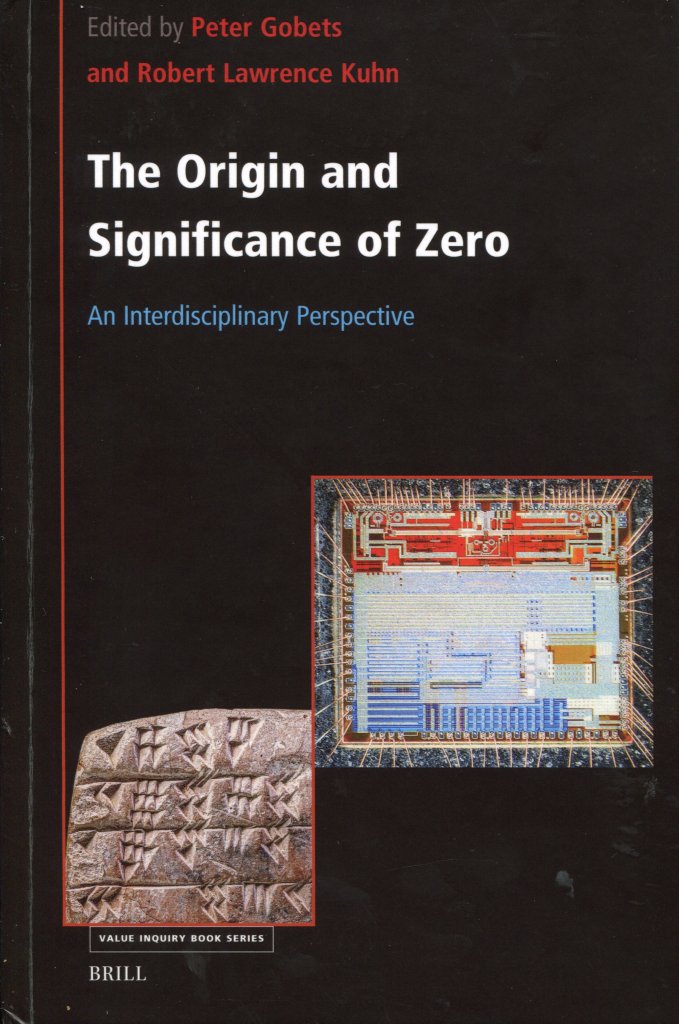
**The Genesis and Importance of Zero: An Interdisciplinary Approach**
Grasping the historical and cultural evolution of zero’s concept is essential for recognizing its profound influence on mathematics and wider human activities. The pivotal volume, *The Genesis and Importance of Zero: An Interdisciplinary Approach*, edited by Peter Gobets and Robert Lawrence Kuhn, investigates this captivating topic. Comprised of 740 pages and 39 scholarly articles, the book, resulting from a partnership between ‘Closer to Truth’ and the ‘Zero Project Foundation’, offers a thorough examination of zero from multiple perspectives.
**Revealing ‘Void’**
The notion of zero has intrigued and challenged thinkers for ages. Philosopher Robert Lawrence Kuhn shares his enduring fascination with ‘void’ in the preface, while Peter Gobets shares insights regarding the aims and intentions of the Zero Project. The book is structured into four primary sections designed to analyze the subject historically, culturally, and scientifically.
**Historical Insights on Zero**
Part 0, consisting of 15 articles, centers on the historical progression of zero. The discussions address the rise of zero across cultures, emphasizing the Babylonian, Egyptian, and Indian numerical systems. This section examines the intricate interactions and exchanges among various civilizations, promoting zero’s advancement. It critically assesses misconceptions, particularly those related to European and Indian mathematical legacies.
**Cultural and Philosophical Aspects**
Part 1 investigates zero within religious, philosophical, and linguistic frameworks, showcasing the range and variety of interpretations surrounding ‘void’. This section illustrates how various cultures incorporate the idea of zero, affecting religious and philosophical perspectives on existence and the cosmos.
**Artistic Expressions**
Veering away from solely academic discussions, Part 2 contemplates zero through artistic expression. It highlights the works of British-Indian sculptor Sir Anish Kapoor, which manifest the Buddhist notion of void, linking zero with aesthetics and spiritual reflection.
**Scientific and Mathematical Consequences**
Part 3 examines the scientific and mathematical aspects of zero, emphasizing its essential role in enhancing scientific reasoning and mathematical practices. This section features in-depth explorations of zero’s application and evolution in Islamic and European mathematics, indicating zero’s global journey from a mystical symbol to a core mathematical tenet.
**Limitations and Critiques**
Despite its extensive coverage, the book has some limitations. The editors’ choice to include papers of differing academic rigor and accessibility illustrates both the merits and drawbacks of such a project. Certain contributions, like those from Jonathan J. Crabtree, stray from academic precision, offering speculative insights on zero’s role in math teaching.
Additionally, readers should approach certain historical inaccuracies found in some papers with caution, especially assertions regarding the cultural suppression of zero in ancient Europe. However, these concerns do not diminish the rich information and perspectives that the book presents.
**Concluding Thoughts**
*The Genesis and Importance of Zero* represents an ambitious and diverse work that merits exploration by anyone intrigued by the cultural and philosophical foundations of mathematics. While varied in viewpoints and quality, the collection embodies a rich interdisciplinary exploration of a concept as mysterious and significant as zero.
Reasonably priced for its scope, the book is better suited for library borrowing rather than personal ownership, mainly due to its cumbersome nature as a physical item. Nevertheless, it stands as a substantial contribution to the ongoing discourse surrounding zero’s role in human comprehension.
In conclusion, although the book occasionally navigates contentious issues, its broad narrative on zero reinforces its crucial role in history, science, and beyond.