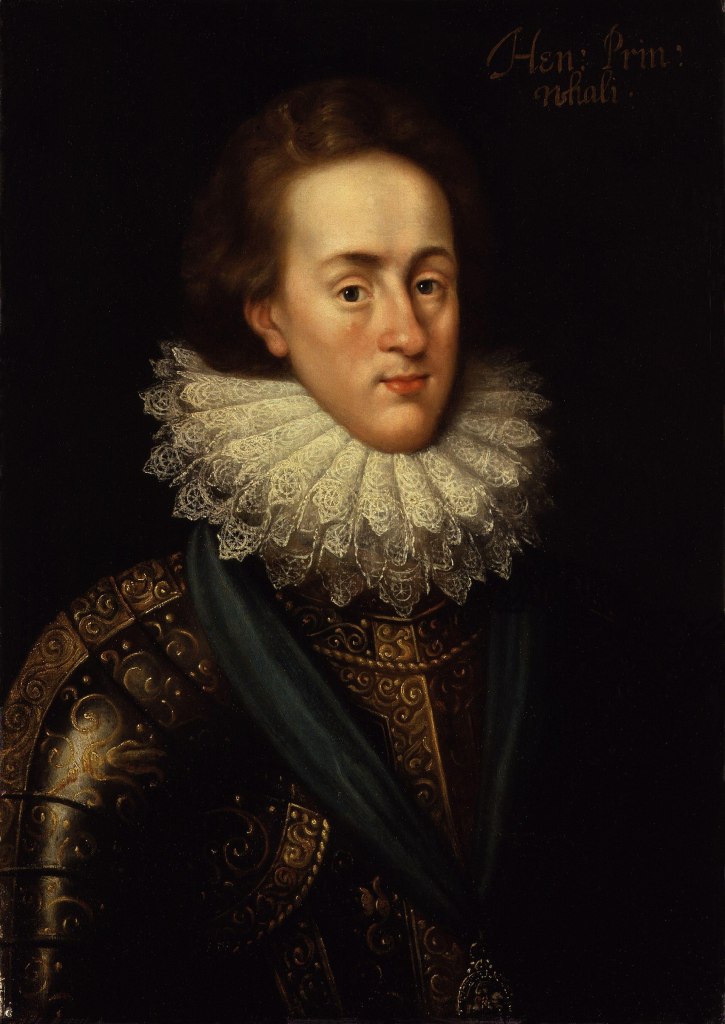
**Henry Frederick Stuart: The Forgotten Prince of Science and Exploration**
Henry Frederick Stuart was born at Stirling Castle in 1594, being the firstborn of James VI of Scotland and Anne of Denmark, which positioned him as the next in line for the Scottish throne. He was named to honor both his grandfathers: Henry Stuart, the ill-fated spouse of Mary, Queen of Scots, and Frederick II of Denmark, celebrated for being a supporter of the famed astronomer Tycho Brahe.
Separated from his mother, Henry was brought up by foster guardians at Stirling Castle, where he began a thorough education, including sports, music, and dance. In 1603, after his father ascended to the English throne as James I, Henry relocated to England and was granted the titles Duke of Cornwall and Prince of Wales, thus becoming the heir to both the English and Scottish crowns.
Under the leadership of Thomas Chaloner, Henry’s household was envisioned as a ‘courtly college.’ He cultivated interests in geography and the Elizabethan aspirations of empire, first suggested by John Dee and Richard Hakluyt. His interests spanned naval and military topics, with Charles Howard, the Lord High Admiral, introducing him to shipbuilder Phineas Pett in 1604. Pett constructed for him a miniature vessel named the *Disdain*, further enriching his fascination.
Henry’s interaction with Walter Raleigh during the latter’s imprisonment in the Tower of London solidified his passion for exploration. Raleigh shared preliminary drafts of what would evolve into *The Historie of the VVorld* with the young prince, who actively advocated for Raleigh’s release.
Sir Arthur Gorges, Raleigh’s cousin, composed a detailed narrative of a naval venture against Spain for Henry, highlighting their mutual interests in exploration. The distinguished mathematician and astronomer Thomas Harriot tutored Henry in practical mathematics and navigation, forming part of a community of math enthusiasts that included Edward Wright and William Barlow.
Henry supported and sponsored numerous exploratory endeavors, becoming a benefactor of the East India Company and endorsing expeditions such as Thomas Button’s 1612 Arctic journey in search of the Northwest Passage, as well as the colonization efforts in Jamestown, Virginia.
Tragically, Henry succumbed to typhoid fever in 1612, at merely eighteen years old. Despite his short life, his fervor for exploration, science, and the advancement of knowledge left a significant legacy, igniting curiosity about what might have transpired had he lived to command real influence.