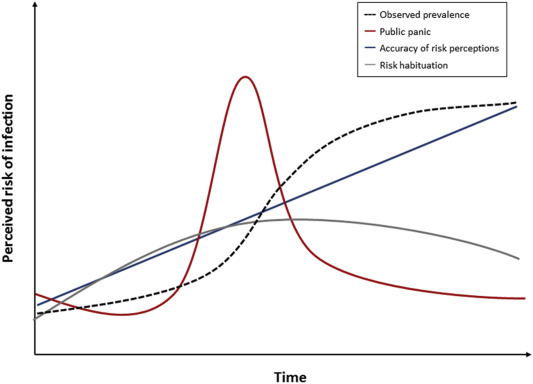
The Guardian has recently brought to light the conversation regarding “behavioural fatigue,” stressing that it is not scientifically substantiated, even though the UK Government has cited it as a justification for postponing strict pandemic actions. This phrase refers to the possible decrease in adherence to health protocols like social distancing. Although “behavioural fatigue” is not precisely outlined in medical texts, the variation in compliance throughout epidemics has been examined.
Studies indicate that shifts in risk perception often lead changes in adherence to precautionary actions. For example, people may overrate risks at the beginning of an outbreak but later downplay them as conditions stabilize, a trend noted since the 1990s.
During the 2009 H1N1 outbreak, multiple studies revealed a reduction in specific preventive actions over time. These included social distancing and hand hygiene, as shown by research conducted in Italy, Hong Kong, Malaysia, and the Netherlands. Simultaneously, television watching patterns in Mexico indicated initial adherence, which waned as the epidemic evolved.
Qualitative research points out that external influences, such as economic burdens and familial obligations, also affect adherence to health guidelines. Mathematical models propose that reductions in compliance could account for the cyclical characteristics of epidemics, a trend observed in historical outbreaks like the 1918 influenza.
On the other hand, some findings suggest stable or rising compliance, as evidenced by research from the Netherlands and Beijing, where individuals upheld or intensified preventive strategies.
This varied evidence contests the assertion that “behavioural fatigue” is without scientific foundation. Fields such as epidemiology, economics, and game theory thoroughly investigate behavioral patterns during epidemics. The narrative emphasizes the necessity for precise scientific communication and the importance of ongoing personal dedication to public health initiatives to alleviate present pandemics.