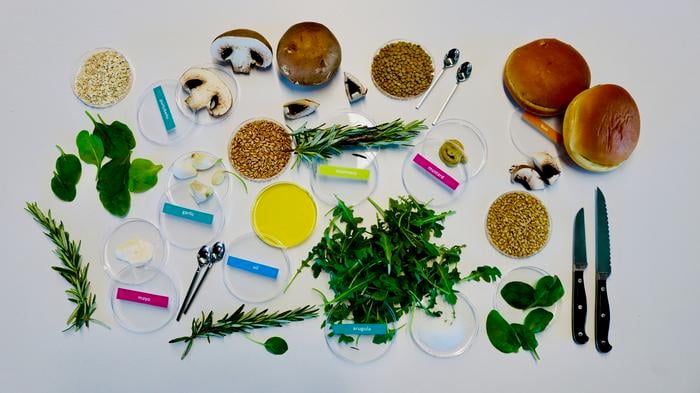
The device had never experienced flavor. It had never sensed the aroma of a grill, never felt the softness of a bun, never understood if salt had any place near beef. What it possessed were 2,216 burger recipes, gathered and organized from the vastness of a public culinary website, along with a question its creators had affixed: not which burger was most probable, but which burger was superior. From that, with no flavor guidelines embedded anywhere, it taught itself the basic form of what humans desire to consume. Then it searched for something improved.
That improvement manifested, in a blind taste test at a restaurant in San Francisco, by outperforming a Big Mac. One hundred and one participants chewed through six burgers without knowledge of their identities, rating an AI-generated recipe higher on flavor than the burger McDonald’s has marketed in over a hundred countries.
From Predicting to Creating
The system is known as BurgerAI, originating from the Living Matter Lab at Stanford, led by Ellen Kuhl, a mechanical engineer who presently oversees the university’s Bio-X life sciences institute. Kuhl is straightforward about the significance of this beyond mere lunch. “Most AI systems are designed to forecast what already exists. We aimed for AI to create what should come next,” she states. The differentiation may seem minor, but it is substantial. A predictive model completes your thoughts; a generative design model is tasked with finding a solution for a specific outcome and then providing you with something that had not existed before. As Kuhl articulates, BurgerAI does not inquire which burger is most probable. It questions which one most effectively fulfills a complex set of competing goals.
Those goals pose a challenge. A burger must be tasty, which contradicts being nutritious, which in turn conflicts with being eco-friendly. Pulling one string often leads the others astray.
Beneath its appealing name lies a rather simplistic piece of technology: a diffusion model, part of the same broad category of AI that fuels image generators, unlike the large language models that generate text. It operates in two phases, first determining which of 146 potential ingredients to include, then calculating the quantity of each. The team trained it using burgers filtered from a collection of over half a million recipes, with the figures involved being somewhat absurd. According to the lab’s estimates, there are more than 10^43 methods to combine those ingredients, meaning there are more potential burgers than there are observable stars in the universe, by a difference that renders the comparison nearly impolite.
To verify that the system genuinely comprehended burgers rather than merely memorizing them, the researchers imposed a unique challenge: rediscover the Big Mac. The recipe was intentionally excluded from its training data (McDonald’s maintains the real one confidential, so the team constructed a reference from four open-source imitations). On average, over ten attempts, the model generated 7.3 million burgers before it inadvertently returned to that exact combination. A reassuring outcome, curiously. It indicates that the well-known recipe is situated where it should be, in a high-probability zone of the design space, identifiable but not trivially accessible.
The Taste Test Was the True Assessment
Then came the aspect no equation could resolve. Recipes are not meals, and an ingredient list does not constitute a dish, so the lab enlisted an executive chef to convert the AI’s cold inventories into genuine cooking directions, which were then given to a different kitchen for preparation. Diners rated everything on a seven-point scale. Two of the AI’s “delicious” burgers matched or surpassed the Big Mac in overall enjoyment, flavor, and texture, with one receiving notably higher votes for being meaty, moist, and quite fatty. The AI did not merely produce plausible recipes, Kuhl asserts; it crafted burgers that actual consumers appreciate.
The eco-friendlier results are where it becomes fascinating. A mushroom burger the model crafted had an environmental footprint more than ten times lighter than that of the Big Mac, based on a score combining land usage, water, emissions, and pollution. Postdoctoral fellow Vahidullah Tac, the paper’s primary author, had anticipated that this would taste like a compromise. “We expected some trade-off between sustainability and consumer acceptance,” he remarks. The mushroom variation did experience a dip in ratings, earthy where testers hoped for savory. However, a beef-mushroom mixture maintained its appeal, ranking comparably to the Big Mac while still reducing its environmental impact. “But we discovered a burger with significantly lower environmental impact could still compete with one of the world’s most successful burgers,” Tac explains.
The nutritional narrative is candid about its boundaries. The model’s healthiest creation, a bean burger, rated almost twice as well as the Big Mac on a standard dietary scale and used one-sixth of the environmental resources, but diners were not deceived into adoring it: bland, dry, grainy, they described it. There is no free lunch here,