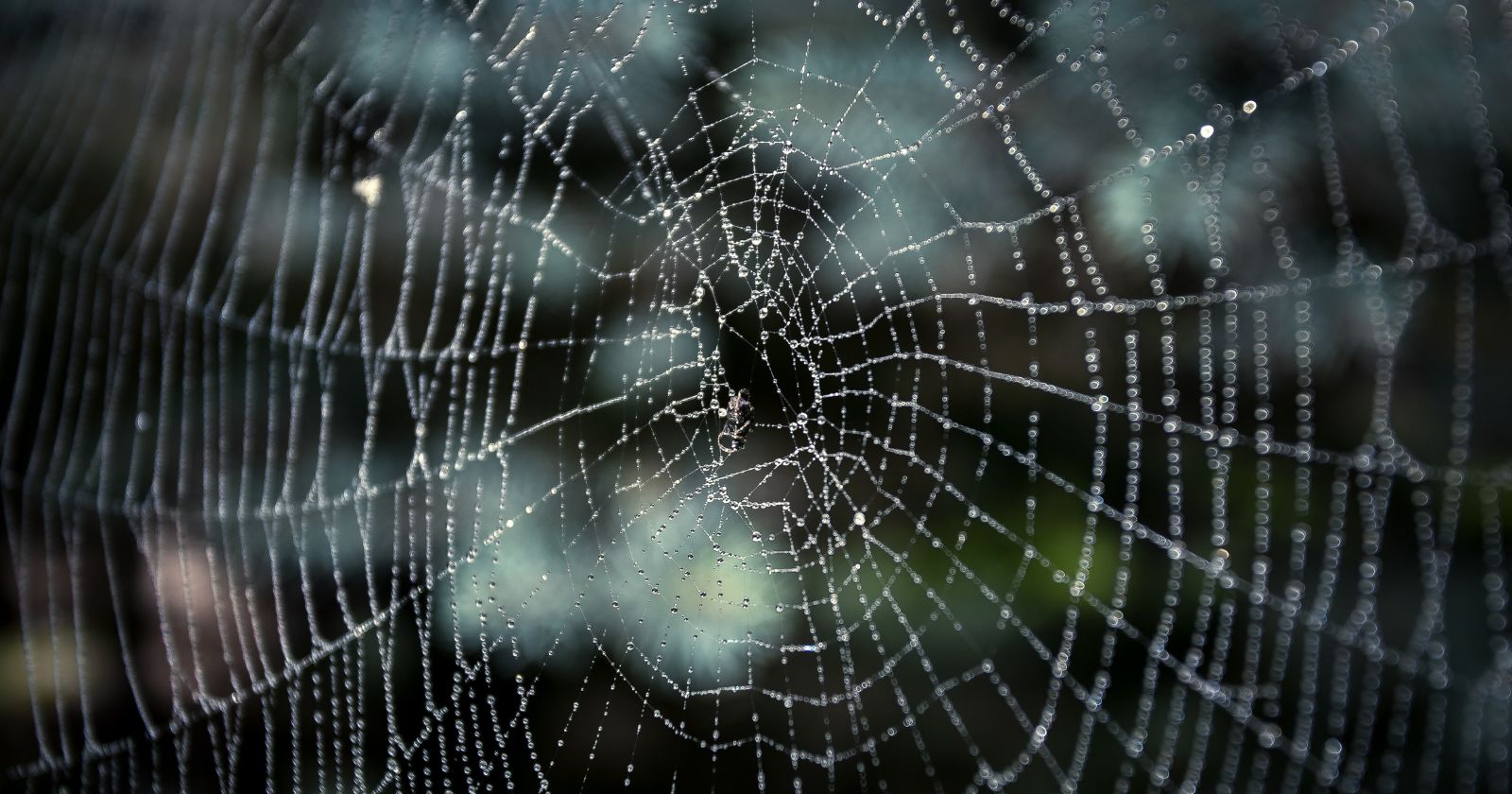
In a narrow corridor within a cave system located on the mountainous frontier between Albania and Greece, there exists a wall enveloped in silk.
The silk covers an area of around 106 square metres — roughly equivalent to half a tennis court or a compact urban apartment. It does not resemble a typical spiderweb as most people envision. Instead, it is a thick, carpet-like assembly of funnel-shaped webs, layered atop one another and occupying every possible stone surface, creating a continuous fabric of arachnid construction that is likely unparalleled anywhere else on the planet.
Within this structure reside roughly 111,000 spiders.
They represent two species — Tegenaria domestica, the common house spider, and Prinerigone vagans, a considerably smaller cousin — which, in every other region of the globe where they have been noted, have a straightforward interaction. The larger species preys upon the smaller one. In typical environments, their encounters result in one becoming ensnared in the other’s web.
However, inside Sulfur Cave, on the Albanian-Greek border, this scenario is absent. Approximately 69,000 of the larger species and 42,000 of the smaller species coexist, quite literally on top of each other, within the same web, spanning an area of about 106 square metres, without any documented predation. It is, to the best of current knowledge, the sole place on Earth where such a phenomenon occurs.
A group of European biologists officially detailed the phenomenon in a paper published in the journal Subterranean Biology in October 2025, following research expeditions initiated after the location was first discovered by Czech cave explorers in 2022.
The particular ecosystem within
The cave in question is known as Sulfur Cave. Its entrance lies in Greece, while its deepest portions extend into Albania. Water laden with dissolved hydrogen sulfide flows through the cave system, imparting a distinct scent reminiscent of rotten eggs. The internal temperature consistently hovers around 26 degrees Celsius throughout the year.
The pitch-black depths of the cave are cloaked in viscous microbial biofilms. These biofilms consist of chemoautotrophic bacteria — life forms that, in contrast to nearly all other organisms on the Earth’s surface, do not depend on sunlight for energy. They directly metabolize hydrogen sulfide, converting chemical energy into biological energy via a process called chemosynthesis. The biofilms serve as the foundation of the cave’s entire food web.
The subsequent link in this food web supports the spider colony’s existence. Feeding on the biofilms are large swarms of tiny midge flies — an estimated 2.4 million individuals of Chironomidae species inhabit the cave system at any one time. These midges emerge from the biofilm-laden water, float through the cave’s atmosphere in vast numbers, and offer the spiders what the study’s lead biologist, István Urák, termed “a constant party” of readily available food.
This specific condition enables the coexistence to occur.
Reasons for the breakdown of the predator-prey dynamic
In the normal environment where these two spider species exist — in homes, gardens, and temperate outdoor settings across Europe — the larger species preys upon the smaller because food availability is erratic. Small insects arrive at spider webs haphazardly. A spider that refrains from hunting when the opportunity arises may go days without a meal. The economic assessment of a predator-prey interaction, even between two spider species that would prefer alternative food sources, often favors the kill.
Within Sulfur Cave, that assessment alters.
Midges arrive at the spider colony nearly incessantly. There is no shortage. There is no reason to take a risk on the next unpredictable meal. A house