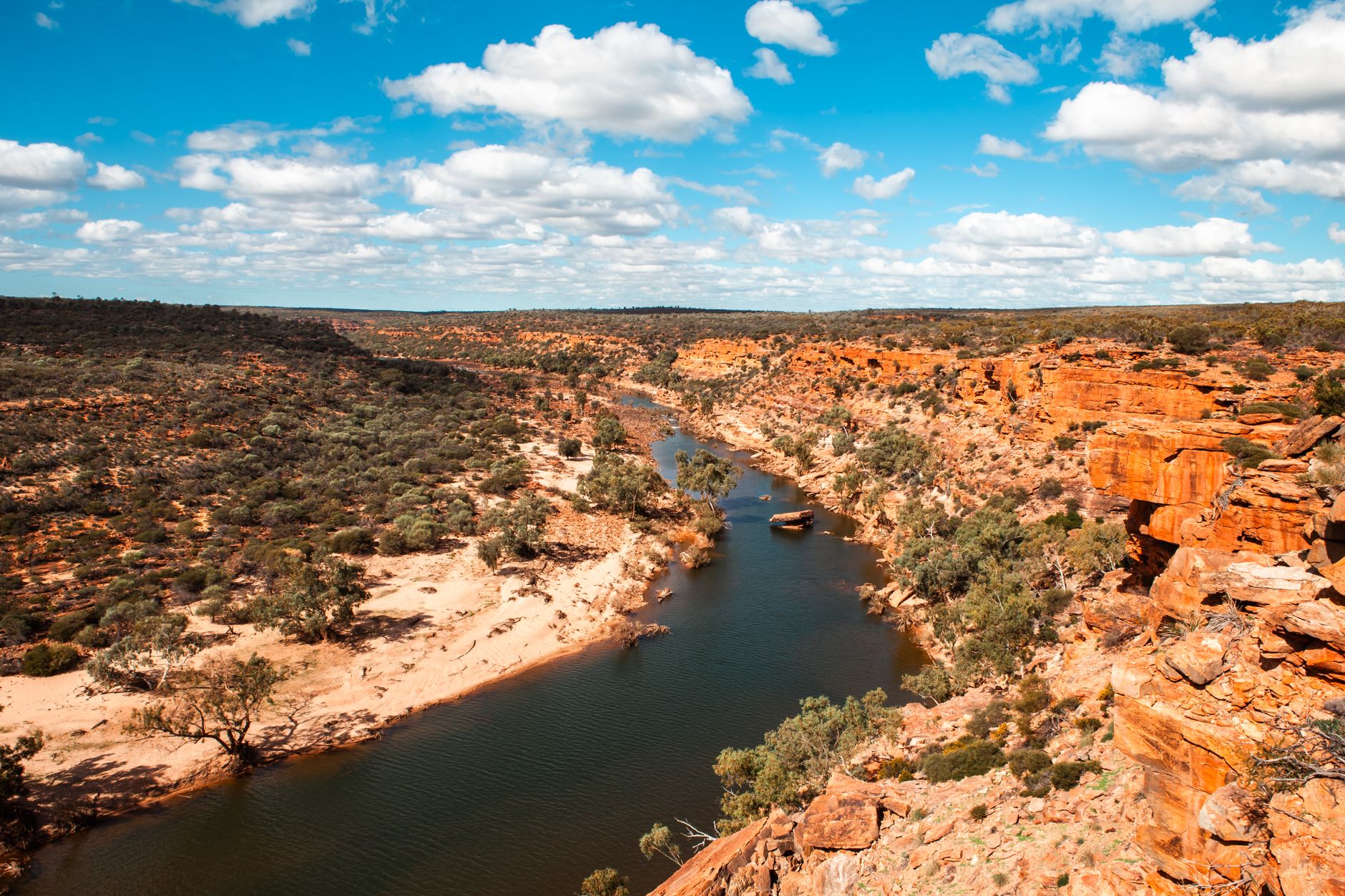
Grasping the timeline of river systems that have been in existence for hundreds of millions of years poses a distinctive challenge. Among these is the Finke River in Central Australia, known to the Arrernte people as Lhere Pirnte and commonly referenced in English as Larapinta. Some assert that it is the most ancient river on the planet, existing before dinosaurs and already tracing its path before the emergence of the first reptiles on land.
When discussing the age of the Finke, geologists highlight its inherited drainage, implying a route established during the Paleozoic Era. Nevertheless, the precise age of the Finke remains an area of speculation. For hundreds of millions of years, the Finke River has reshaped its channels, gorges, and sediments innumerable times.
Rivers are susceptible to alterations due to elements like sediment accumulation and tectonic shifts. Such factors indicate that the ancient nature of a river like the Finke is more related to the endurance of its drainage pattern rather than a continuous physical channel tracing back 350 million years.
In Central Australia, the Finke River deviates from typical river behavior as it carves its way through the MacDonnell, Krichauff, and James Ranges, crossing ridges it would usually be expected to bypass. This supports the concept of antecedence, where the river preserved its path by eroding as the landscape ascended around it during the Alice Springs Orogeny, a mountain-building event believed to have occurred around 300 million years ago.
The 2022 research led by John Jansen did not specifically determine the origins of the Finke but investigated how the river has adapted to changes in the landscape over a more recent period. The study shed light on how the Finke has reacted to tilting, sediment build-up, and erosion over millions of years.
Contemporary Finke undergoes prolonged dry spells, with waterholes frequently dotted along its 800-kilometer stretch. This intermittent nature positions the river more as a dynamic drainage system instead of a consistently flowing body of water.
The assertion regarding the Finke River’s existence prior to the arrival of the first reptiles is now debated due to recent findings. Likely amniote footprints discovered in Victoria, traced back to 356 million years ago, imply that reptiles may have emerged much earlier than once believed, complicating the story surrounding the Finke’s ancient chronology.
Geoscience Australia labels the Finke as “one of the oldest rivers in the world,” a position that is increasingly justifiable given the intricacies involved in defining and dating such extensive geological histories. The Finke River showcases remarkable geological continuity, narrating the saga of a durable drainage pattern that has endured despite natural transformations over time.