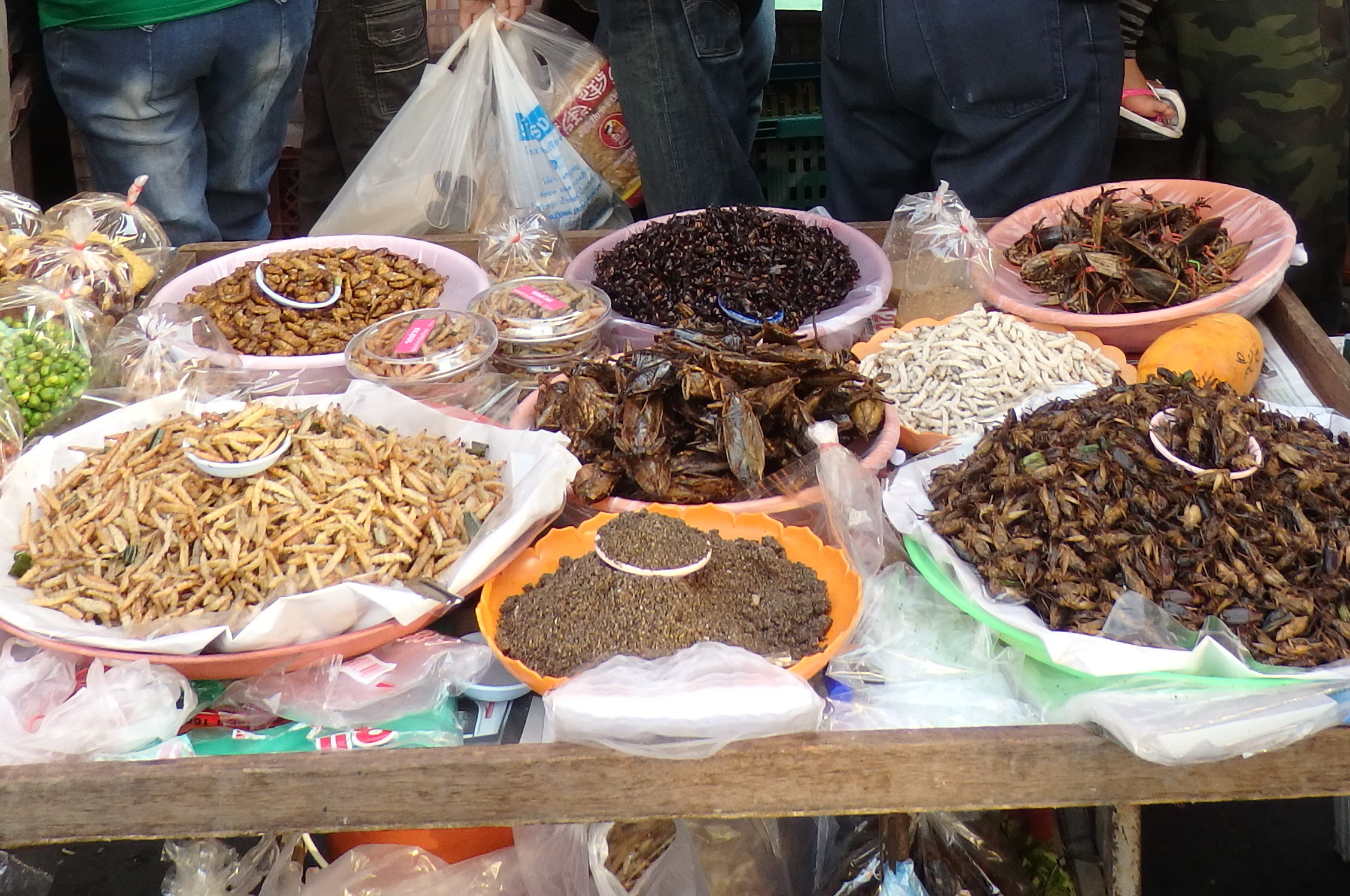
Disgust can seem instinctive even if it is influenced by culture. For numerous Western diners, the presence of a cricket or mealworm on their plate crosses a boundary that prawns, oysters, and blue cheese do not. However, in many regions globally, insects are considered normal food, raising a challenging question: when did this division start?
A 2026 study in Science Advances examines issues far beyond just recipes and dining customs. Researchers analyzed ancient dental calculus for insect DNA and investigated modern and ancient human variants related to two genes aiding the stomach in digesting chitin, the robust carbohydrate found in insect exoskeletons.
The findings from both records indicate a similar trend. Ancient Homo sapiens from northern Eurasia revealed minimal convincing insect DNA, while genetic variants connected to diminished stomach expression of chitin-digesting enzymes were already present at least 9,000 years ago. The research does not pinpoint a specific gene for disgust or demonstrate that biology induced a cultural taboo. It proposes that the Western aversion may be partly rooted in an older ecological and dietary background.
Ancient tartar turned into a record of potential meals
Dental calculus is mineralized plaque. As it solidifies on a tooth, it can encase microbial and dietary materials for thousands of years. This makes it invaluable, albeit not completely sterile: DNA may originate from intentional consumption, an insect ingested with water, material introduced post-mortem, or contamination during excavation and preservation.
The researchers gathered 1,028 sequencing libraries from the AncientMetagenomeDir database along with another previously published dataset. These represented calculus from 745 anatomically modern humans, primarily ancient Europeans, and 18 Neanderthals. The oldest Homo sapiens samples date back approximately 33,000 years.
A dedicated reference database included 10,761 insect mitochondrial genomes. The team utilized a Bayesian screening tool to identify potential matches and then applied further tests for species specificity, read abundance, and the fragmentation typical of ancient DNA. In comparison, the same method was used to analyze calculus from 57 gorillas and 39 chimpanzees with better-documented diets.
Only ten ancient human samples revealed validated species-level insect traces: eight Homo sapiens and two Neanderthals. Among all 745 modern humans, the read abundance was significantly lower than that observed in gorillas, western chimpanzees, and Neanderthals.
Most Homo sapiens traces did not appear to be intentional insect meals
The types of insects were as crucial as their rarity. Calculus sourced from an individual around 29,500 years old in present-day Czech Republic contained DNA from a nonbiting midge whose larvae inhabit lake sediment. The authors deemed accidental ingestion through drinking water more plausible than collecting the insect as sustenance.
A German individual from about 9,200 years ago and an Egyptian mummy contained insects linked to damp structures or stored goods. These traces might indicate contaminated grain, subsequent exposure in museums, or errors during the sampling of calculus. Mummies and preserved skeletons exhibited the highest diversity, including beetles related to decomposing organisms.
One instance highlighted the issue quite clearly. Calculus from a Neanderthal aged 42,800 years excavated in Belgium contained DNA from the harlequin ladybird, an Asian species introduced to Europe only in the late twentieth century. Regardless of how it arrived, that DNA was not indicative of a Palaeolithic diet.
This finding serves as a caution for ancient-diet research. Dental calculus is not always a perfect time capsule, and the mere presence of a food species cannot be automatically construed as consumption. Even under the most favorable interpretation, insect DNA was nearly non-existent in Homo sapiens calculus. The authors conclude that intentional entomophagy was uncommon in northern Eurasia, and incidental ingestion occurred only occasionally.
Neanderthals exhibited a stronger yet still incomplete signal
Neanderthal samples contained more insect DNA, overall comparable to western chimpanzees that incorporate insects as a dietary component. Fly and mosquito DNA were prominent. One Neanderthal yielded two validated species, including a moth fly whose larvae can thrive on late-stage decaying matter.
The paper links this pattern to an existing theory: Neanderthals might have occasionally stored animal carcasses in ponds or marshy areas, granting access to fly larvae and other insects. DNA from mosquito sources would align with a wet environment. However, this does not establish that behavior solely from dental plaque, and only 18 Neanderthal individuals were assessed.
An earlier ScienceBlog review of how archaeology reconstructs Neanderthal life highlights the same evidentiary challenges. Isotopes, tools, animal remains, and molecular traces can suggest one explanation is more plausible without preserving anything akin to a written menu.
The genetic comparison revealed an intriguing correlation. The limited number of sequenced Neanderthals and the single Denisovan included in that analysis possessed variants associated with enhanced chitin digestibility. This association supports the dietary interpretation, but the small archaic sample is insufficient to characterize every Neanderthal or Denisovan community.
CHIA and CTBS exhibited exceptionally strong