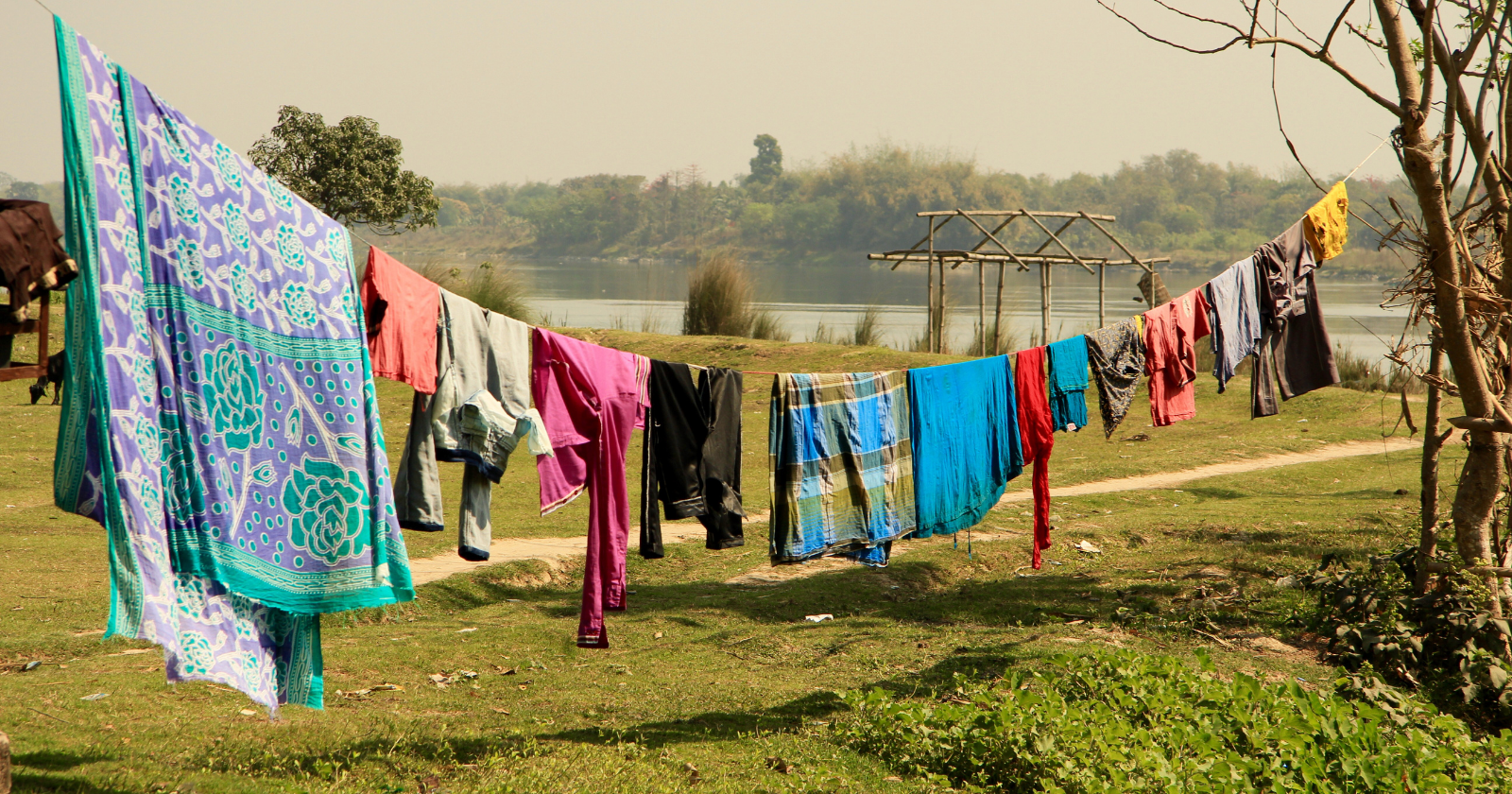
The challenge, as Remya Jose confronted it, was a clash between a river’s routine and an examination year. At 14, she was in the 10th standard, the pivotal year for board exams in India, attending a school far from her village in Kerala’s Malappuram district, necessitating a journey involving three buses and nearly two hours each way. Then her mother became ill, her father was undergoing cancer treatment, and household laundry, which was done manually at the river, fell to Remya and her twin sister.
Hand-washing a family’s laundry is time-consuming work, and a girl facing a four-hour daily travel schedule simply lacks that time. Many in her situation would dream of a washing machine. Unfortunately, Remya’s family couldn’t afford one, and the electricity supply in rural Kerala made even that dream problematic. So during her school vacation, she made the choice to create one that required no power whatsoever.
Reverse-engineering through observation
Her approach exemplified the essence of engineering education: she analyzed how an electric washing machine functions and disentangled the concept from the power source. Remove the motor, and a washing machine is relatively straightforward. It consists of a perforated drum spinning within a tub of soapy water, where agitation performs the cleaning, and speed contributes to drying. The motor merely facilitates rotation, which is precisely what a bicycle transforms leg movement into.
Thus, she sketched it out: an aluminum structure, a wire-mesh cylinder inside to hold the clothes, and components from a bicycle’s chain, sprockets, and pedals affixed to enable the spinning of the cylinder. Her father brought the design to a local automobile workshop and asked the mechanics to fabricate it in their spare time, purchasing materials per his daughter’s specifications—bicycle parts, aluminum sheets, and the drivetrain—for approximately 2,000 rupees.
The machine they created exceeded the expectations set by her drawing. To use it, one loads the clothes into the cylinder, fills the cabin with water to the laundry level, adds detergent, and lets it soak for a minimum of ten minutes. Next, one pedals for three to four minutes, spinning the drum fast enough to agitate the clothes through the sudsy water. After draining the soapy water through the faucet, they refill, pedal again to rinse, and keep pedaling to expel excess water: the rotating cylinder acts as a centrifuge, with the clothes coming out about 80 percent dry, suitable for a brief line-drying even in Kerala’s humidity.
Recognized on a national level
The invention might have remained a local curiosity if it weren’t for the existence of an institution in India designed for this kind of innovation. The National Innovation Foundation, a government initiative that seeks out grassroots inventors via the Honey Bee Network, documented Remya’s invention, registered a patent for it in 2003, patent number 643/CHE/2003, and included it in the national register of grassroots innovations under its official, literally descriptive title: the Washing Cum Exercise Machine.
The entry in the register reads like a subtle endorsement of the design’s advantages in its intended context. Rural electricity is both scarce and pricey, making an electric washing machine twofold inaccessible; a power outage during operation compels an electric washer to restart, whereas Remya’s machine is unaffected by a grid it doesn’t engage with; and the entry notes that pedaling also serves as a form of exercise. The merits of the design spread: the machine earned Remya a National Award from President A.P.J. Abdul Kalam, the scientist-president who championed grassroots innovation, and her narrative has circulated globally as a prime example of frugal engineering, alongside MIT and NGO initiatives in Guatemala that arrived at pedal-powered washers through far more credentialed avenues.
Remya did not cease her efforts. The washing machine represented the beginning of her journey; she later collaborated with the National Innovation Foundation as an innovator, developing additional devices for rural homes, and her records from school fairs—a thermal-retaining casserole, a model refrigerator—suggest that the washing machine was not merely a singular flash of inspiration but the initial public manifestation of a systematically inventive mind responding to a laundry challenge.
The hours dedicated to studying
It is the initial accounting that grounds the narrative. The machine came to be because of a teenager’s allocation of time: a two-hour commute each way, an examination year, a sick mother, and a river that claimed her afternoons. Every component of the design aligns with that reality. No electricity, due to the grid’s unreliability and the unaffordability of bills. Constructed by the local car workshop, reflecting the manufacturing capability the village possessed. Ten minutes of soaking, as soaking affords her free time to devote to her studies, and four minutes of pedaling, as that was the worth of the chore now. Even the 80 percent dryness is a representation of time savings, compressing hours of dripping on a line into a final quick pedal.
Engineers are instructed to articulate the problem before devising a solution. Remya’s problem statement