The Nancy Grace Roman Space Telescope, launched by NASA on August 30 via a SpaceX Falcon Heavy, has commenced a three-month journey to reach the Sun-Earth L2 region, approximately one million miles distant. This launch marks the culmination of a development saga that began with an unexpected phone call between two branches of the U.S. government.
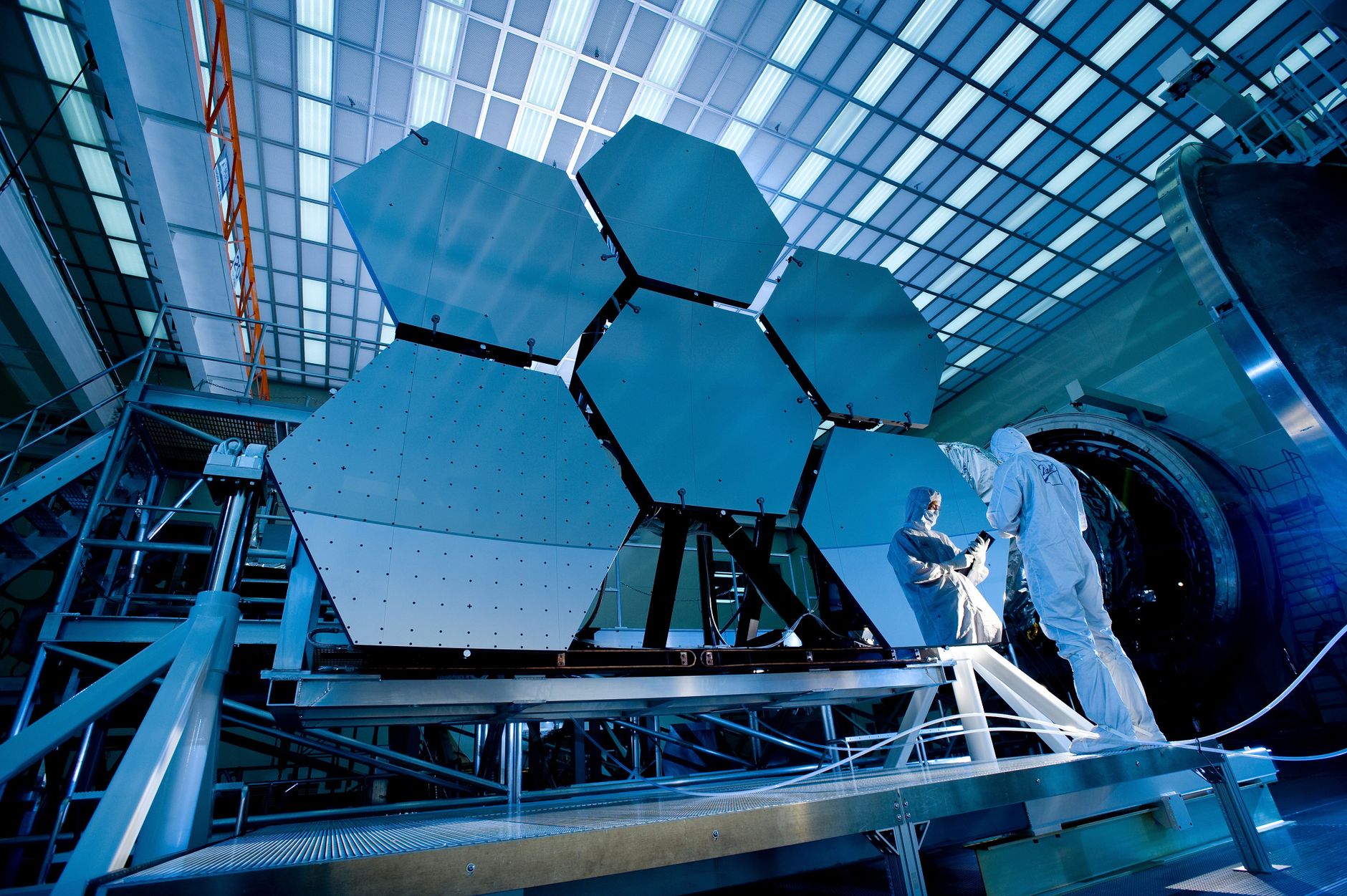
At its core, Roman features a 7.9-foot (2.4-meter) primary mirror acquired from the National Reconnaissance Office, which is responsible for the creation and operation of U.S. reconnaissance satellites. This mirror shares the same diameter as that of Hubble. The hardware had not previously been in space and was no longer necessary for intelligence operations.
However, this statement requires an important clarification. NASA did not obtain a completed spy satellite that simply needed to be oriented away from Earth. Rather, it received advanced optical equipment, which NASA then meticulously modified over several years to integrate one of the donated components into a civilian observatory aimed at infrared astronomy.
Two surplus telescopes emerged in 2011
The mission currently referred to as Roman was conceptualized prior to the inclusion of the intelligence hardware. According to the 2010 decadal survey on astronomy and astrophysics, a Wide Field Infrared Survey Telescope, or WFIRST, was identified as the top priority for large space missions. Initial designs utilized a smaller mirror, typically around 1.3 to 1.5 meters in diameter.
In January 2011, the National Reconnaissance Office reached out to NASA, offering two surplus telescope assemblies for transfer. This development was made public in June 2012, with contemporary reports indicating that the hardware was stored in Rochester, New York, at the contractor facility then known as ITT Exelis.
The assemblies comprised 2.4-meter primary mirrors, mirror supports, a secondary mirror assembly, and apparatus for managing the optical temperature. They did not come with a scientific camera, spacecraft bus, solar panels, communication equipment, or a launch system. Any classified sensors that may have been planned for placement behind the optics were excluded from the donation.
The NRO has not officially revealed every detail of the reconnaissance program for which the hardware was designed. This ambiguity enables speculation that exceeds the available public information. What can be established as a definitive fact is that the agency possessed high-quality, space-adaptable telescopic resources that it no longer needed, and NASA was permitted to investigate them for scientific purposes.
The donation transformed WFIRST instead of establishing it
A larger mirror collects more light and can achieve greater resolution at a specific wavelength. Transitioning from an approximately 1.3-meter design to a 2.4-meter aperture significantly expanded WFIRST’s scientific capabilities. A NASA technical history document notes that the larger aperture offered roughly three times the collecting area and a point-spread function nearly half as wide as the previous design.
Nasa organized a new science definition team to evaluate whether the donated hardware could fulfill the aims put forth by the decadal survey. Its 2013 design analysis outlined a mission centered around one of the newly available Hubble-quality telescope assemblies. This brought forth WFIRST-AFTA, with AFTA representing Astrophysics Focused Telescope Assets.
This represented a considerable redesign rather than a mere replacement. A telescope intended for observing the Earth’s surface has distinct optical, thermal, and mechanical specifications compared to one meant for detecting faint infrared radiation in deep space. The Roman team altered the shape and surface of the inherited primary mirror and applied a silver coating selected for its effectiveness at near-infrared wavelengths.
NASA’s description of the finished observatory states that the primary mirror now weighs 410 pounds (186 kilograms), which is less than a quarter of Hubble’s weight. It operates in conjunction with nine additional mirrors, support structures, and electronics within the Optical Telescope Assembly.
The mirror gave NASA an advantageous starting point. However, it did not encompass the entirety of the telescope.
A Hubble-sized mirror offering a considerably broader view
The most notable similarity between Roman and Hubble is not that they are duplicates. While they share a primary mirror diameter that contributes to Roman’s Hubble-like clarity, their main cameras were developed for different purposes.
Roman’s Wide Field Instrument is an approximately 300-megapixel infrared camera constructed from 18 detectors. It is capable of capturing a section of the sky at least 100 times larger than the area that Hubble can scan.