**Chernobyl: A Relentless Resound of Atmosphere and Engineering**
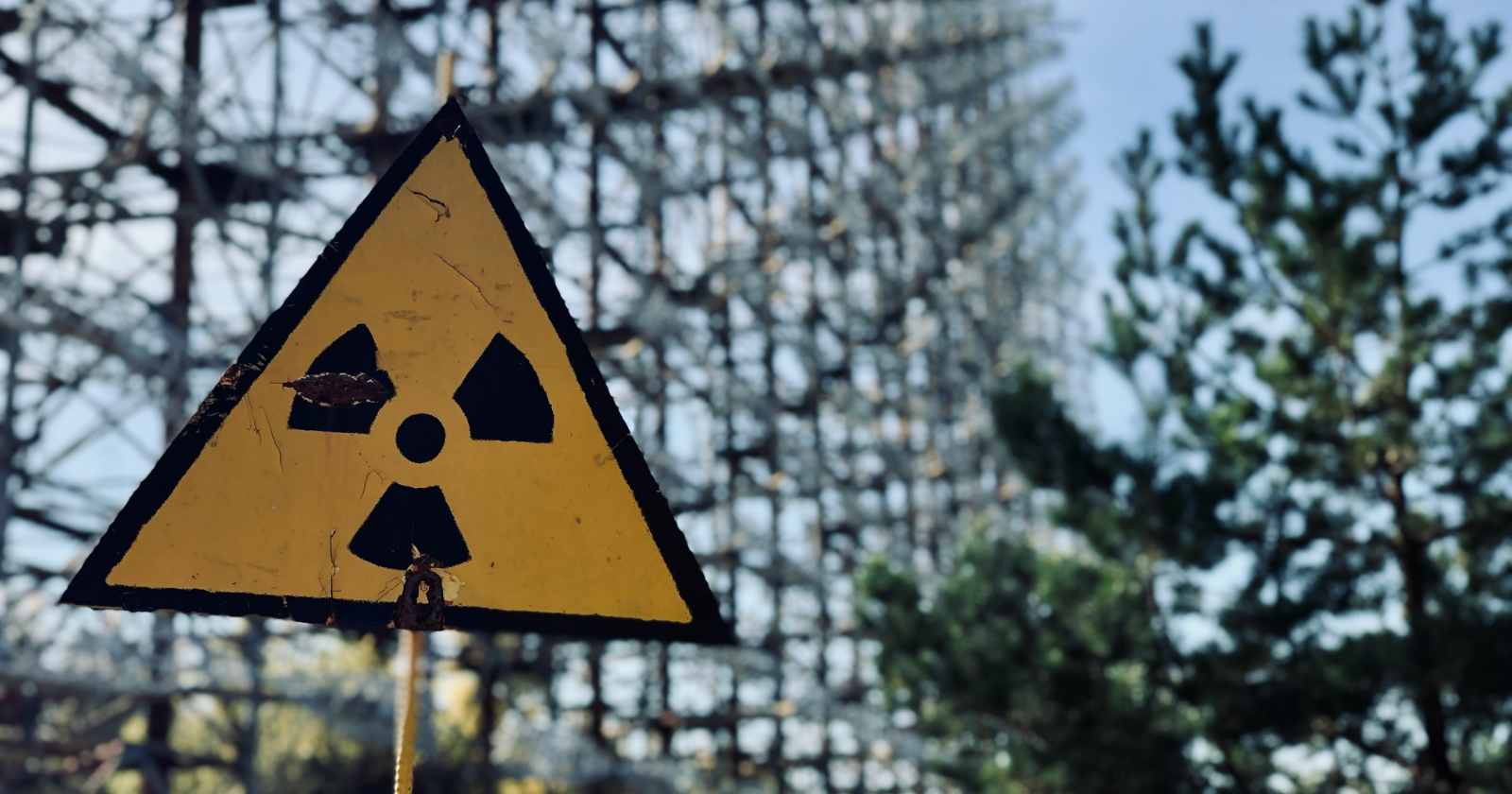
For many, Chernobyl lingers as a feeling. Perhaps it’s the dull gray glow of a tourist snapshot from the exclusion zone, a stranger in protective gear beside a corroded Ferris wheel that never operated. Perhaps it’s the five hours of somber, well-crafted drama from a few years back that had an entire generation of viewers reciting the term “RBMK reactor” as if they truly comprehended its meaning.
Chernobyl persists in public consciousness mainly as a feeling, steeped in foreboding and concrete, long before it is recognized as a tangible location with an actual fourth reactor still upright under a roof that someone had to conceptualize, finance, and construct.
I have never visited Pripyat and likely never will. Yet the real incident behind all that feeling resurfaced again, significantly quieter, in the final weeks of 2016, when a curved steel arch approximately the size of a football stadium settled over the remnants of that fourth reactor. It did not receive a miniseries. It was marked by a press announcement and an event with individuals in hard hats exchanging greetings in the cold.
**A New Chapter of Confinement**
The structure is dubbed the New Safe Confinement, and the term “arch” minimizes its significance. The European Bank for Reconstruction and Development, which oversaw the funding via the Chernobyl Shelter Fund, stated its finished weight at 36,000 tons and its height at 108 meters. Scientific American drew comparisons years prior to its completion: measured from the ground to the apex of the torch, the arch surpasses the height of the Statue of Liberty.
**A Solution Developed in Weeks, Not Decades**
The necessity for a second shelter reveals more about 1986 than about 2016. The initial structure over reactor four, commonly referred to as the sarcophagus, was erected in mere months, constructed by teams who could only operate near the reactor in short shifts due to radiation. It was an emergency response, built to create a temporary reprieve, and it was never designed to endure for a century. Within ten years, concerns about its integrity had already arisen.
As the New Safe Confinement project secured significant funding and a construction timeline, the role of the old shelter had quietly shifted from a permanent fix to a temporary measure that had long overstayed its welcome. The EBRD’s own project documentation clearly states the purpose of the new arch: to enhance safety at the site and ultimately facilitate the dismantling of the aging shelter while managing the radioactive waste it contained appropriately. This represents the peculiar contradiction at the heart of the entire venture.
It is an extraordinary engineering challenge. You must create something new that eventually allows for the safe dismantling of your initial attempt to resolve the issue, decades later, without endangering anyone in the process.
**Why You Slide a Roof Instead of Building One Where It Stands**
One might assume the most straightforward strategy is to construct the new shelter directly atop the old one, analogous to adding a second roof to a home. Reactor four made this nearly unfeasible. Radiation levels near the existing structure were, and still are, excessively high for long-term construction directly above. Thus, engineers built the New Safe Confinement approximately 300 meters away on safer ground, in two segments that were later merged, and only then shifted the entire assembled arch sideways into position utilizing specially designed rails and, as noted by the EBRD, 224 hydraulic jacks pushing it forward 60 centimeters at a time.
Consider that logic for a moment. Construct the secure version in a location where workers can actually survive the building process, then maneuver the completed structure to the one location where no one could have built it in the first place. The relocation itself becomes the main aim of the design.
**Ten Meters an Hour**
The movement began in mid-November 2016 and wrapped up by the month’s end, with the arch gliding over its rails toward the reactor building at an approximate rate indicated by the above title — around 10 meters an hour when the jacks were actively operating. It seems slow because it was intentionally careful, advancing in controlled increments with pauses between pushes to assess both the structure and the rails beneath it. There was no rush, which itself was the entire engineering strategy.
Novarka, the French consortium formed by Vinci Construction and Bouygues Construction that erected the arch, positioned a project director named Nicolas Caille before the press once it reached its intended location. He described it as “a monumental engineering achievement that will guarantee optimal safety conditions for the Ukrainian population for the next century.” Igor Gramotkin, the plant’s director general at the time, articulated the rationale behind that century-long timeframe even more plainly: “We were not constructing this arch for ourselves. We were creating it for our children, our grandchildren, and our great-grandchildren.”
That represents a substantial timeframe for a single construction.