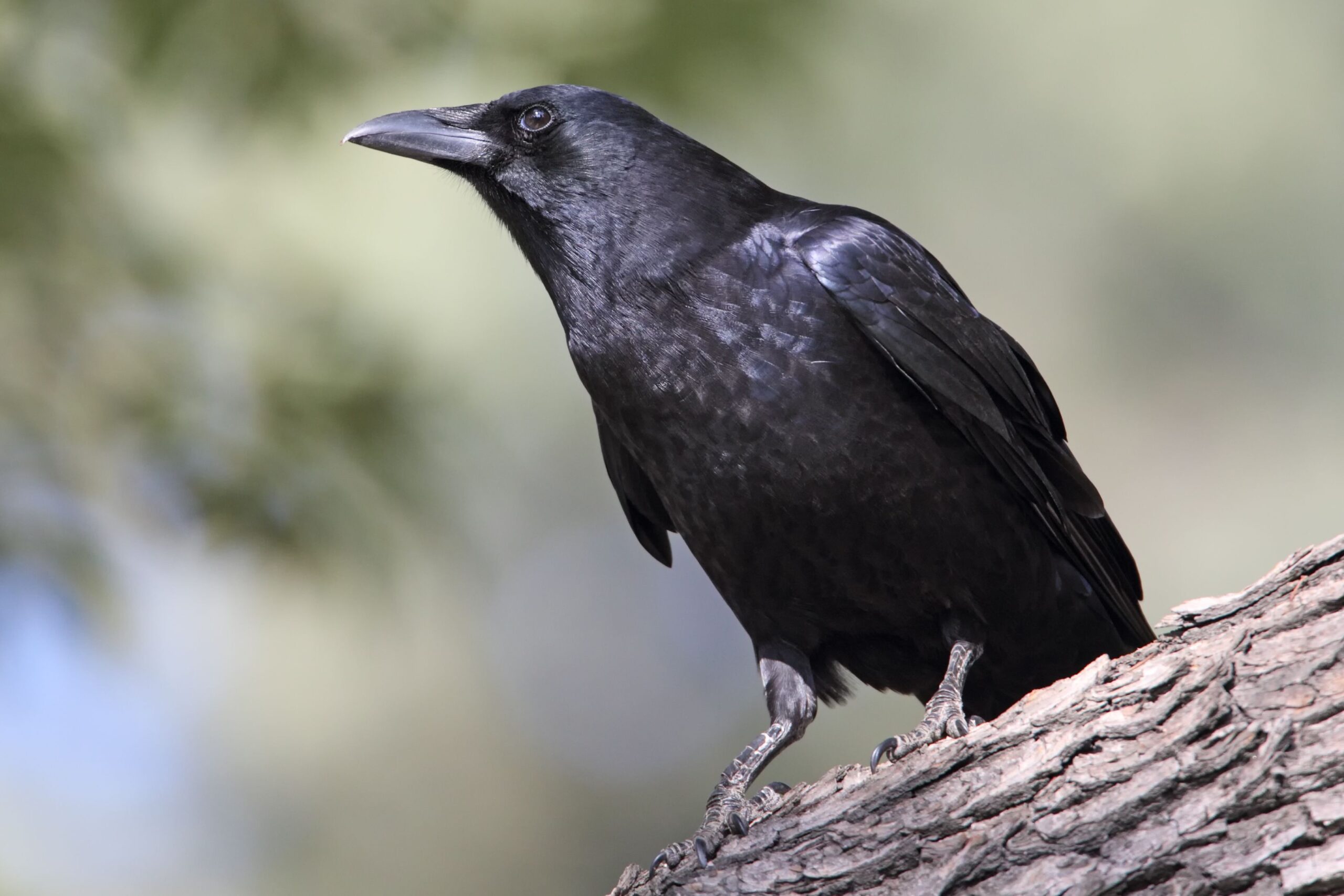
On four mornings in February 2006, a section of grass on the University of Washington’s Seattle campus became the focus of an extraordinarily lengthy study. A remotely activated net ensnared seven American crows across four sites. Researchers placed colored leg bands on each bird, managed them for roughly 15 minutes, and released them.
During the capture and banding process, biologist John Marzluff and his team donned identical rubber caveman masks. To anyone passing by, it seemed like a costume. To the involved birds, it turned into the visage of a perilous human.
Later, when individuals roamed the campus wearing that mask, crows reprimanded them with harsh vocalizations. Some followed or gathered in a group. Without the mask, passersby attracted minimal notice. Another face used as a control was also largely disregarded.
The reaction extended beyond the seven banded birds. Other crows picked it up, younger birds joined in, and the alert expanded beyond the areas where the trapping occurred. It also endured through years of changes in the local population.
Then it ceased. In September 2023, approximately 17 and a half years after the initial captures, Marzluff again traversed the campus in the caveman mask. No crow scolded him.
The Mask Served as a Controlled Signal
The well-known image of a scientist wearing a caveman mask may render the study almost whimsical. Its significance lay in the experimental control. The mask provided the crows with a human face that remained constant while the person wearing it could change.
Prior to trapping, the caveman face incited little reaction. The association developed when the crows were captured and handled. During later walks, the researchers rotated the threatening mask with a neutral condition. One control involved a mask designed to resemble former US vice-president Dick Cheney. They also walked without any mask.
A University of Washington account released during the experiment highlighted the critical contrast: individuals walking without the menacing mask elicited the birds’ typical behavior. It was the learned face, rather than merely a nearby researcher, that triggered the alarm.
In a broader series of tests throughout Seattle, different realistic masks exchanged the dangerous and neutral roles across various sites. A face linked to capture in one location acted as the innocuous control in another. This complexity made it more difficult to argue that the crows merely disliked certain features.
The crows were acting based on their history. They had associated a specific face with a particular negative event and retained that distinction when the same face reappeared in different attire and on another body.
ScienceBlog reported on the initial phase of the research in 2008 when the campus alert was just two years old. Even at that time, the finding was stronger than the common assertion that crows are intelligent. These were free-living birds identifying a specific human face outside the immediate context in which they learned it.
Seven Captured Birds Could Not Explain What Followed
The colored bands enabled the team to differentiate the seven initial crows from others. This distinction became essential as unbanded birds began scolding the mask as well.
Some of those birds may have witnessed the trapping. Flocks of 10 to 30 crows had circled and called while the seven were being handled, providing an audience for the original encounter. However, the response continued to manifest in birds that could not have personally experienced that afternoon.
A five-year analysis published in Proceedings of the Royal Society B monitored how the knowledge was disseminated. Crows that accompanied a knowledgeable bird during a test could later react to the mask independently. Young birds from families that scolded also learned the response, offering evidence for both horizontal learning among peers and vertical learning from parents to offspring.
The geographical impact expanded as well. Crows further away from the capture sites began responding, in line with a warning spreading through overlapping social networks. The researchers were not simply counting the memories of seven long-lived individuals. They were observing information propagate.
The title’s term “taught” requires one clarification. The study illustrated social learning, not necessarily intentional teaching in the human sense. A parent did not need to set out to provide a lesson. When adults scolded and mobbed a masked walker, a young crow could recognize the face, join the group, and learn which individual was seen as dangerous.
Why One Warning Became a Campus Tradition
Crow alarms are challenging to keep confidential. A loud scolding draws attention. A mob attracts more birds. Each reappearance of the mask thus provided experienced crows an opportunity to showcase the reaction to birds unfamiliar with the events of 2006.
This dynamic helps clarify why the warning initially became stronger instead of gradually diminishing. In Marzluff’s later overview of the full experiment, the percentage of birds reacting increased during the first seven years. By the twelfth year, around four in ten crows encountered during the trials were still scolding the caveman face, roughly double the response to the control.
The annual walk was not equivalent to the 2006 trapping.