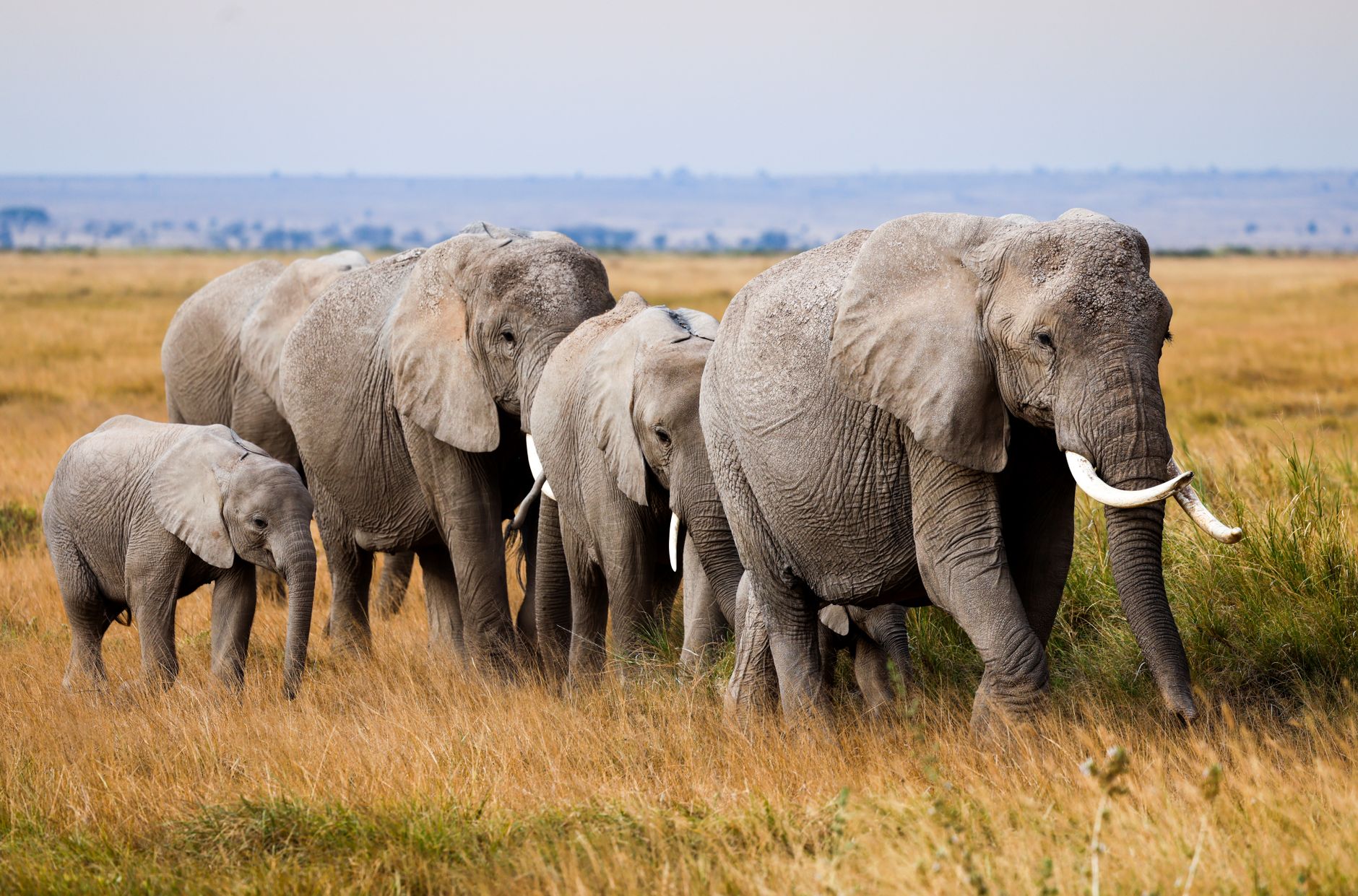
A Comprehensive Exploration of Elephant Communication: Decoding the “Names” in Rumbles
Elephants, celebrated for their cognitive abilities and intricate social structures, have captivated researchers with their vocal interactions. A compelling feature of their vocalizations is the profound rumble, a sound that conveys a rich tapestry of information beyond simple noise. Recent studies have illuminated the potential for elephants to utilize distinct calls, reminiscent of “names,” to refer to particular individuals within their groups.
In a pioneering 2024 investigation carried out in Kenya, researchers captured 469 rumbles—contact, greeting, and caregiving—from African savannah elephants. These recordings were integral to an extensive study conducted by Save the Elephants, incorporating data from 101 callers and 117 receivers across the Samburu and Buffalo Springs National Reserves and Amboseli National Park.
An advanced machine-learning model indicated that these rumbles possess sufficient structure to correctly identify the targeted receiver approximately 27.5% of the time, a result markedly superior to the 8% identification rate using randomly mixed data. This implies that elephant calls encompass receiver-specific information.
The study’s strength was further affirmed through playback tests with wild elephants. Researchers discovered that when elephants were exposed to a rumble initially directed towards them, they exhibited faster and more robust responses, suggesting that these calls could be personalized.
How did researchers ascertain the intended receiver of a call? They concentrated on particular contexts: contact rumbles were recognized when a single family member was more than 50 meters away, or when only one elephant responded or approached; greeting calls were directed towards those who moved closer or were approached; and caregiving calls targeted a specific calf. This meticulous methodology ensured precision in determining the intended recipient for each call.
The research utilized recordings spanning from 1986 to 2022, benefiting from extensive field knowledge that enabled researchers to identify individual elephants. While the model proved adept at identifying intended receivers in numerous instances, its accuracy exhibited variability. It was more successful with contact and caregiving calls compared to greeting calls, and adult female calls were classified with greater accuracy than those from juveniles.
The concept of “names” among elephants does not imply a human-like language structure. The model’s outcomes suggest that the utilization of specific labels may depend on context, primarily employed when an individual is out of sight or when a calf needs care. Researchers emphasize that names in human communication are also utilized selectively, reinforcing the notion that elephant “names” are applied with discretion.
Crucially, the playback experiments indicated that elephants exhibit behavioral responses to calls aimed at them, underscoring the existence of meaningful receiver-specific information within their vocal expressions. These discoveries highlight that elephants possess a sophisticated communication system that conveys identity, age, sex, and emotional states while potentially directing calls to specific individuals.
This research contextualizes the findings on elephants within the framework of other known animal communication systems, such as those seen in dolphins and parrots, though with notable differences. Unlike these species, elephants do not imitate individual vocalizations but may employ a distinct labeling system grounded in learned associations.
Despite these captivating revelations, numerous questions persist. The exact nature of the cues that identify the receiver remains ambiguous, as the model’s accuracy across different callers was limited. This indicates that although elephants may share labels for individuals, each caller might articulate them in unique ways.
The study highlights the intricacy of elephant society, in which social connections and communication are subtle and refined. The capacity of elephants to direct calls towards specific individuals could be vital in their dynamic social environments, supporting everything from caregiving to coordination within the community.
Future investigations will need to broaden their scope, aiming to study more elephants and diverse populations to comprehensively understand how universal and generalized this communication system truly is. Nevertheless, this research has initiated a pathway into the possibilities of elephant communication, suggesting that these remarkable beings may mentally tag their companions and interact with exceptional specificity.