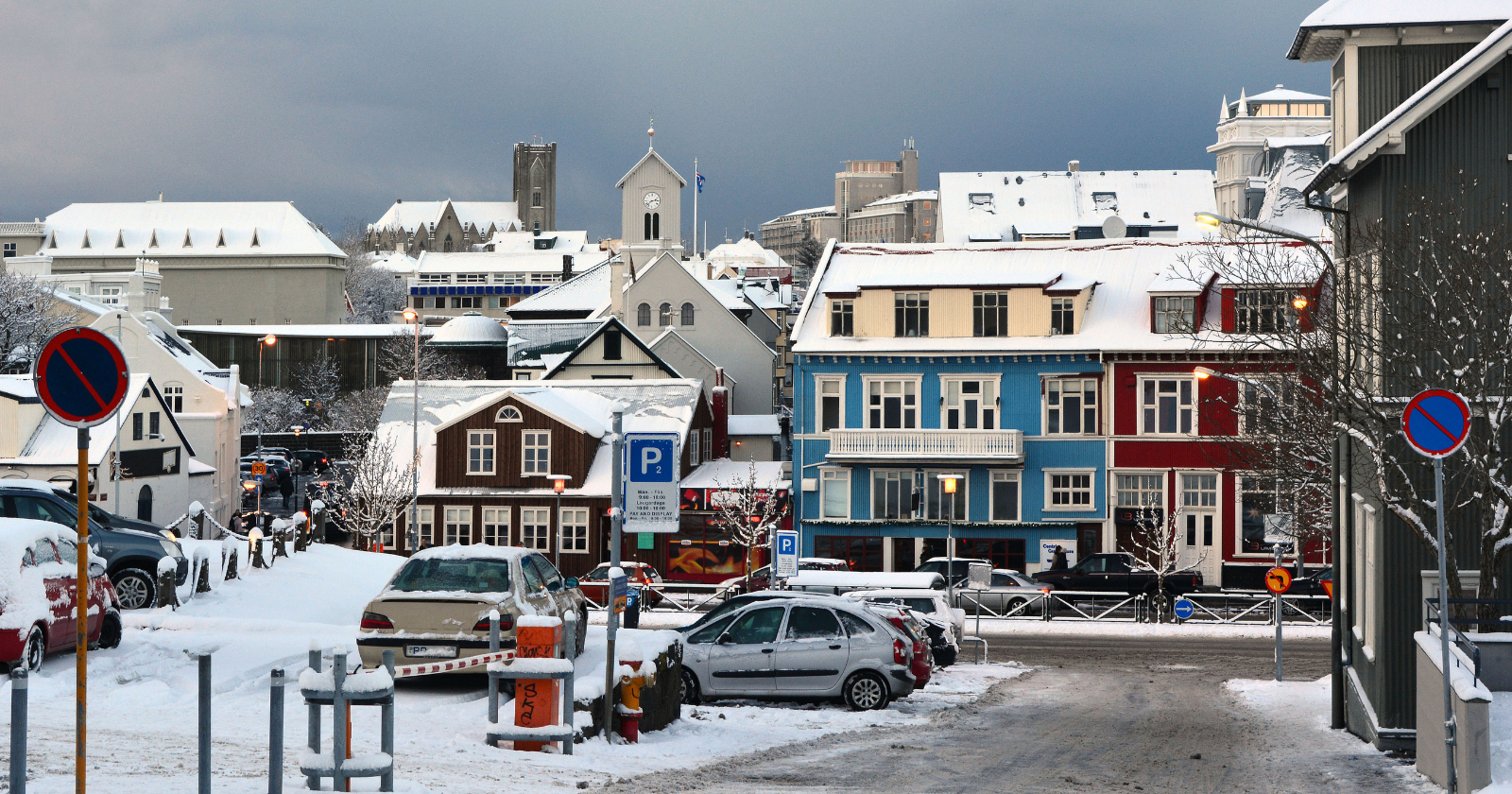
Rainfall on an Icelandic mountainside is maintaining a footpath in central Reykjavík dry this winter. That is the entire concept, and it takes a moment to grasp. Precipitation falls on elevated terrain, seeps into fractured basalt, remains for a time where the rock is warm, then rises again and ultimately ends up in someone’s radiator. Iceland utilizes nearly all of its domestic heating through that process. Orkustofnun, the National Energy Authority of the country, estimates geothermal energy accounts for around 90 percent of all energy used by Icelanders for heating their residences, with district heating services reaching 95 percent of the populace.
**Source of the heat**: No magma is involved in this process. This often surprises individuals. In a review published in Jökull, the journal of the Icelandic geoscience societies, Stefán Arnórsson, Guðni Axelsson, and Kristján Sæmundsson characterize Icelandic geothermal fluid as originating from meteoric sources: precipitation and snowmelt, with a component of seawater in certain coastal areas. Their description of the low-temperature systems supplying Reykjavík adheres to a model first suggested by Gunnar Bödvarsson. Groundwater flows from the highlands to the lowlands, plunges through an open fracture or along a dyke to a depth of several kilometers, heats up against hot rock, and resurfaces due to the lighter weight of hot water compared to cold.
Then the fracture exhibits something peculiar. The circulating water extracts heat from the rock at the base of the loop. This causes the rock to cool, contract, and crack slightly more, leading the fracture to descend gradually, over the years. The system deepens its own extraction shaft as it functions. This phenomenon is evidenced in the temperature logs. Under Laugarnes, a field directly beneath the city, readings at 3,000 meters are close to 160°C, significantly lower than what the regional gradient of approximately 120°C per kilometer would suggest. Cold water has been cooling the underlying rock for an extensive period.
Some of that water is sufficiently old to be noteworthy in its own right. The same paper mentions that specific low-temperature fluids contain particularly low amounts of deuterium, the heavy isotope of hydrogen, a signature indicative of glacial meltwater deposited prior to the current interglacial period. Parts of the supply consist of rain from an ice age, arriving several millennia late.
**Laundry springs and the initial pipeline**: Generations of women in Reykjavík transported their laundry to the hot springs of Laugardalur, the valley just east of the center whose name translates to hot spring valley. In its account of the neighborhood, the Reykjavík Grapevine observes that some trace the city’s name, meaning smoky bay, to steam billowing from those pools, and that diverting the water between 1928 and 1930 led to a dramatic reduction in the springs’ size. Reykjavík gained central heating but lost its laundry facilities. Orkustofnun marks the beginning of the first public scheme in 1930, when a three-kilometer pipeline transported water from those washing areas to Austurbæjarskóli, a primary school on the town’s eastern edge.
**What occurs post-radiator**: “It’s quite straightforward, once you’ve already set it up,” Eirikur Hjalmarsson of Reykjavík Energy told CBC, responding to yet another series of Canadian inquiries about Icelandic footpaths. Water that has just heated a building exits at around 30°C, still warm enough to be beneficial, and is pushed through plastic tubing buried beneath the streets and paths. Hjalmarsson outlined the benefits as reduced plowing, minimal road repairs (plows can damage asphalt), and fewer incidents of individuals slipping on ice. The magnitude is easily undervalued. In the same Jökull review, the breakdown of Iceland’s direct geothermal usage estimates snow melting uses 215 MW of installed capacity and 378 GWh annually, slightly ahead of the 361 GWh dedicated to bathing and swimming. Iceland expends marginally more heat de-icing its streets and paths than for filling every pool and hot tub it possesses.
**Reason the water bypasses treatment plants**: What is in this water that allows it to circumvent a treatment facility entirely? Not much, and that is intentional. Water from the low-temperature system contains very few dissolved solids, primarily because the basalt it has passed through has low chloride content. This keeps the pipes clean, preventing corrosion and scale, and eliminates any need for the water to be treated between the well and the radiator. Water from the volcanic high-temperature fields contains excessive hydrogen sulfide and silica that could precipitate, preventing that from being feasible. Facilities like Nesjavellir utilize heat exchangers to warm clean water instead. This is why the hot tap water in Reykjavík has a faint sulfur scent, while the cold does not. Visit Reykjavík recognizes 18 geothermal swimming pools within the city, most of which are outdoors and accessible throughout the year.