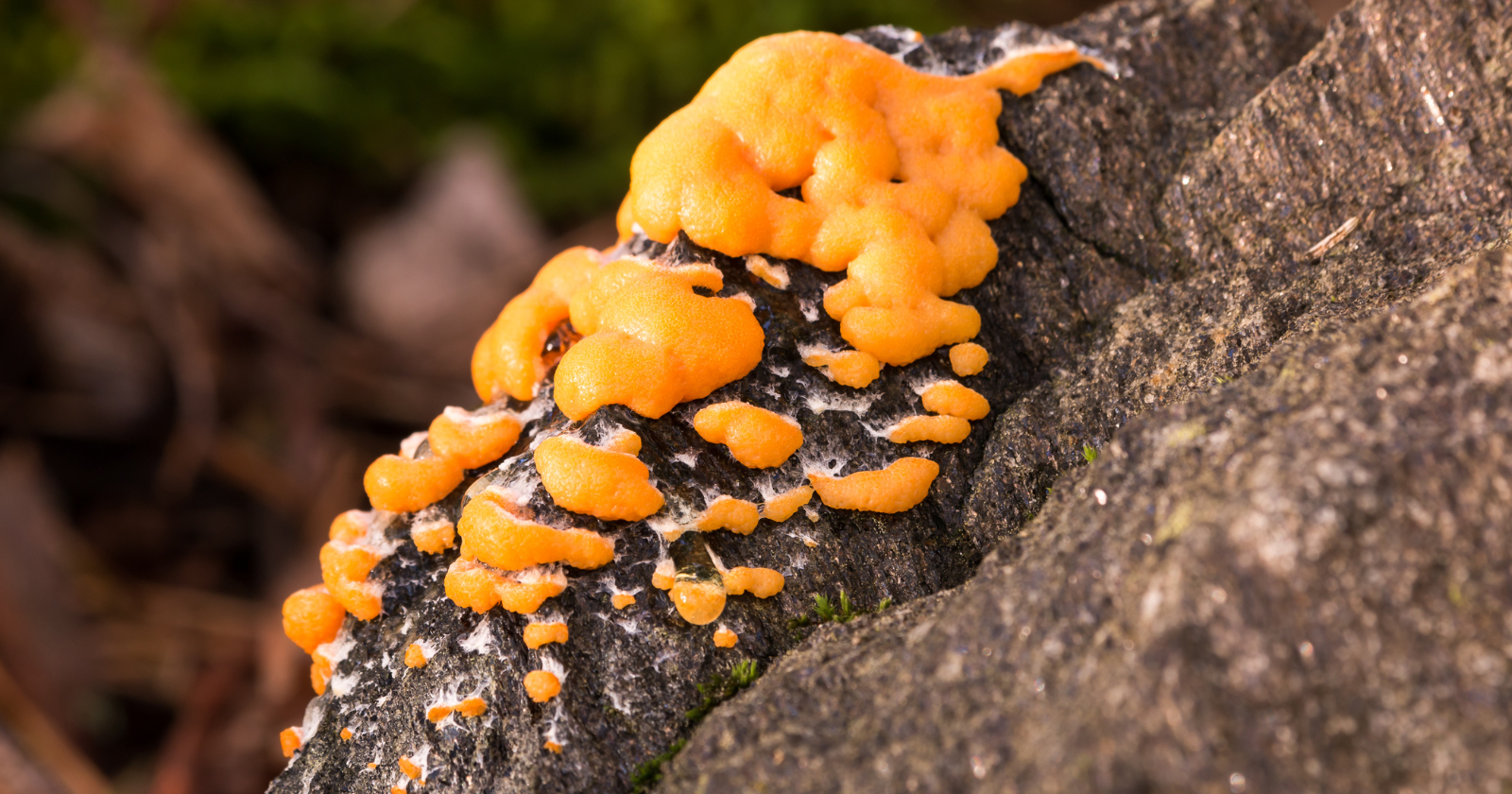
A Mindless Genius: The Extraordinary Problem-Solving Abilities of Physarum polycephalum
In a serene laboratory in Japan, an unusual experiment took place. A mindless yellow mass, known as Physarum polycephalum, inadvertently charted a version of the Tokyo rail network on a moist surface. This slime mould, thriving on decomposing matter, behaves in a manner distinctly different from any ordinary organism. It has no neurons, no brain, and lacks any structured hierarchy of authority. However, with thousands of nuclei contained within a single cellular body that can grow to the size of a dinner plate, it navigates its surroundings with remarkable efficiency.
A team of researchers headed by Atsushi Tero and Toshiyuki Nakagaki put the slime mould through its paces. They dispersed oat flakes—symbolizing various cities in Tokyo—on a layer of agar. Starting its journey from the oat flake designated as Tokyo, the mould embarked on its exploration, ultimately pruning its network of tunnels to form a feasible connection among all 36 “cities.” When juxtaposed with Tokyo’s real rail network, the study, published in Science, indicated that the mould’s network bore a striking resemblance in terms of tube length, average distance traveled, and robustness against interruptions.
The mechanism driving this decision-making is notably simple. Liquid flowing through the mould’s tubes operates based on a basic feedback loop: a stronger flow leads to tube enlargement, facilitating further fluid movement, whereas a weaker flow results in tube shrinkage and eventual elimination. This decentralized approach, articulated into mathematical models by Tero’s team, demonstrated the ability to produce efficient networks as needed, unsettling some engineers with its apparent simplicity.
Topographical signals also influenced the mould’s course. Bright light was utilized to deter the mould, with shaded regions signifying livable ground while bodies of water and mountains were intensely lit to act as obstacles. While the geographical context was essentially established beforehand, the routing—the notoriously intricate aspect—was delegated to the organism, eliminating the lengthy discussions typically entailed in rail development.
This experiment builds upon earlier fascinating discoveries. In 2000, Nakagaki’s group noted a disjointed slime mould maneuvering through a plastic maze, ultimately delineating the shortest path to a food source, an accomplishment featured in Nature under “Intelligence.” Subsequent experiments hinted at the capacity for learning. In Toulouse, a team directed by Romain Boisseau revealed that moulds adapted to acrid-tasting bridges over a span of days, a behavior understood as habituation, the most fundamental form of learning, with indications that this trait could transfer between linked slime moulds.
Beyond the realm of biology, this technique attracted the interest of astronomers. Algorithms inspired by Physarum aided in replicating the vast filaments of the cosmic web—structures of gas and dark matter that connect galaxies—aligning closely with dark matter simulations. This interdisciplinary application of slime mould behavior in cosmology was chronicled in the Astrophysical Journal Letters.
The tale of Physarum polycephalum took a humorous twist when the Tokyo team received the Ig Nobel Prize for transportation planning in 2010. While it may seem amusing at first sight, the study highlights the mould’s benefit of being free from biases and interests—a clear contrast to human-oriented planning fraught with vested interests and historical baggage. Given adequate time, the slime mould prioritizes efficiency, a task that Tokyo’s planners have mimicked over years through negotiations and compromises, though without dissenting viewpoints prolonging the procedure.
Ultimately, the unassuming slime mould encourages us to reevaluate problem-solving frameworks, delving into nature’s unrefined and impartial way of navigating the complexities we strive to untangle.