A 14,300-year-old canine jawbone from Gough’s Cave in Somerset has resided for almost a century within the Natural History Museum’s collections. In March 2026, ancient-DNA analysis finally verified what its skeletal remains could not: genetically, the creature was a dog, not a wolf.
Interestingly, it was not the oldest dog examined in the research. A specimen from Pınarbaşı in Türkiye, estimated to be around 15,800 years old, provides researchers with the earliest genetic evidence of domestic dogs identified to date, extending their confirmed timeline far into the last millennia of the Ice Age.
## The notion of self-domestication, clearly articulated
One prevalent theory explaining the domestication of wolves into dogs is termed the commensal scavenger hypothesis. This theory suggests that some Paleolithic wolves began to approach human camps seeking food scraps and other resources, and that those more daring, less fearful wolves managed to take advantage of this new ecological opportunity.
As the theory posits, over many generations, natural selection may have favored wolves that were able to dwell in closer proximity to humans. It is speculated that humans might have started to actively influence these animals later, once a cohort familiar with living near human habitats had already formed.
This remains a hypothesis rather than an established reconstruction that scientists can accept as fact. In a 2021 review published in *Frontiers in Veterinary Science*, researcher James A. Serpell from the University of Pennsylvania characterized the commensal scavenger model as a prevailing explanation in the literature but argued that it does not align with what is known about Pleistocene hunter-gatherer societies. He proposed an alternative theory wherein humans adopted and socialized wolf pups.
Further reviews still consider scavenging, human adoption, and collaborative hunting as competing hypotheses. Strong evidence suggests that dogs evolved from Ice Age wolves. However, the exact circumstances that led to the initial interactions between certain wolves and humans remain unresolved.
## Insights from new ancient DNA findings
The study in 2026 involved collaboration among researchers from various institutions, including the Natural History Museum, LMU Munich, Oxford, and the University of York. Complete genomes retrieved from ancient canids demonstrated that dogs were already [widely established across Europe and Anatolia by at least 14,000 years ago](https://www.nhm.ac.uk/press-office/press-releases/world-s-oldest-genetic-evidence-for-domestic-dogs-identified-in-.html).
The research team identified dogs linked to culturally and genetically distinct hunter-gatherer groups, including Magdalenian and Epigravettian populations. This supports the likelihood of an earlier origin, as recognizable dog-like groups had already dispersed across a significant portion of western Eurasia by the time these animals perished.
However, it does not elucidate precisely how domestication commenced. Olaf Thalmann and his colleagues had previously provided an earlier estimate in a 2013 *Science* study utilizing ancient mitochondrial genomes. Their molecular dating suggested that domestication began between roughly 18,800 and 32,100 years ago, which is one reason why dates nearing 30,000 years often appear in discussions regarding the origins of dogs.
Debate surrounding this upper limit continues. Fossils that precede the newly verified dogs have sometimes been suggested as potential early dogs or dog-like wolves, but genetic confirmation becomes significantly stronger closer to the end of the Ice Age.
## The Pınarbaşı fish reveal a different aspect of the narrative
A stable-isotope analysis yielded one of the most revealing discoveries in the 2026 study. Dogs found at Pınarbaşı had diets that were unusually fish-rich, closely resembling those of the humans inhabiting the area.
Lizzie Hodgson, a researcher at the University of York, remarked that it was improbable that the dogs were catching substantial amounts of fish on their own, suggesting that active feeding by humans was the more likely explanation. Alongside evidence of deliberate burial, this outcome indicates that dogs were already deeply integrated into human societies.
Nonetheless, provisioning does not imply that scavenging instigated domestication initially. By 15,800 years earlier, these creatures were already genetically distinguishable as dogs, which indicates an established relationship between humans and dogs rather than the initial phases that led to it.
## The Ice Age also safeguarded wolves that remained wolves
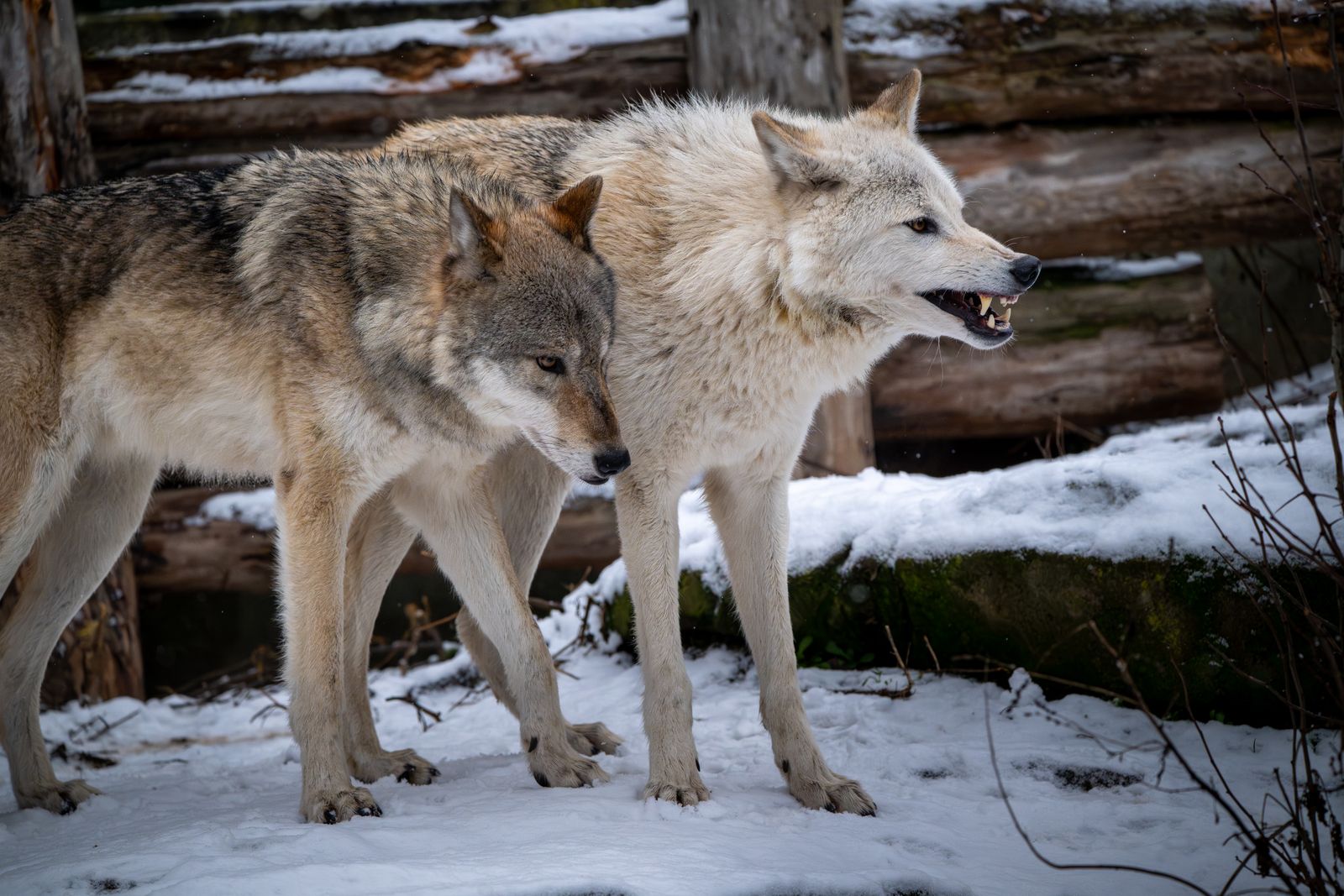
Two exceptionally preserved canid pups discovered near Tumat in northeastern Siberia in 2011 and 2015 present a useful contrast. A 2025 analysis determined that the roughly two-month-old sisters were wolves rather than early domestic dogs. They were consuming solid food, such as woolly rhinoceros meat, while still nursing.
In January 2026, Sólveig M. Guðjónsdóttir and her colleagues published a separate study in *Genome Biology and Evolution* after sequencing a high-coverage woolly rhinoceros genome from tissue preserved in one of the pups’ stomachs. The study primarily focused on the rhino population shortly before extinction, yet the remarkable sample also provides a glimpse into genuinely wild wolves living approximately 14,400 years ago.
The Tumat specimens should not be misconstrued as literal “cautious relatives” of the early dogs. They belonged to a