**Oliver Selfridge and the Pandemonium Architecture: Trailblazing Routes in AI**
Oliver Selfridge, an important individual in the foundational stages of artificial intelligence, made notable contributions that continue to influence the domain. In 1959, Selfridge penned a seminal paper introducing an innovative concept referred to as “pandemonium architecture.” This framework suggested a system where numerous simple units, each designed for specific tasks, are interconnected to execute intricate cognitive processes.
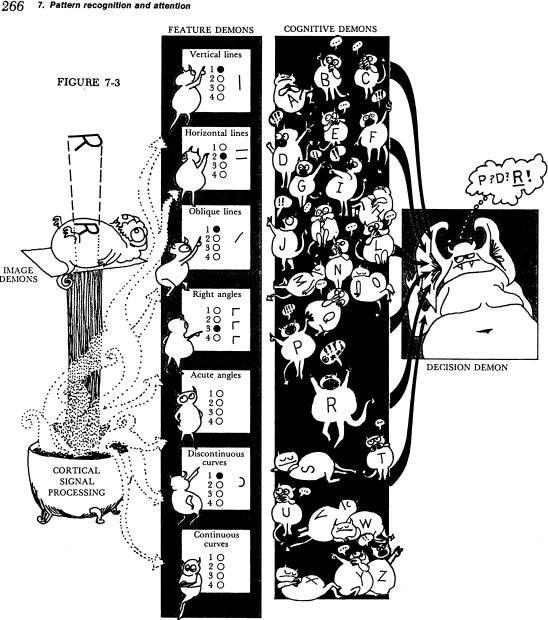
The pandemonium model has played a pivotal role in the progression of neural networks, igniting developments that have paved the way for today’s advanced machine learning technologies. The core idea revolves around a hierarchy of “demons,” each tasked with distinct aspects of recognition and processing, working together similarly to parallel distributed processing.
This pandemonium concept gained traction, partly due to the unforgettable illustrations by Leanne Hinton showcased in the 1977 textbook “Human Information Processing” by Lindsey & Norman. The illustrations, compared by some to a child’s bad dream, have been characterized as an artistic effort to clarify the complex mechanisms at play in cognitive functions.
While Oliver Selfridge’s pandemonium model is widely celebrated, the role of illustrator Leanne Hinton often goes unrecognized. Attempts to verify Hinton’s connection to the illustrations have led to inconclusive outreach to Leanne Hinton, Professor Emerita of Linguistics, who did not reply to inquiries.
In addition to his contributions to artificial intelligence, Oliver Selfridge authored four children’s books, showcasing his diverse talents. He married three times and was involved in exposing the NSA’s ECHELON surveillance program. Despite his achievements, many aspects of his life and work, including the specifics of collaborations and personal relationships, remain subjects of ongoing interest and investigation.
For those intrigued by visual depictions, the whimsical demons of the pandemonium architecture remain a topic of intrigue and scholarly inquiry. Their delightful representation of complex processes highlights the enduring captivation with human cognition and artificial intelligence.