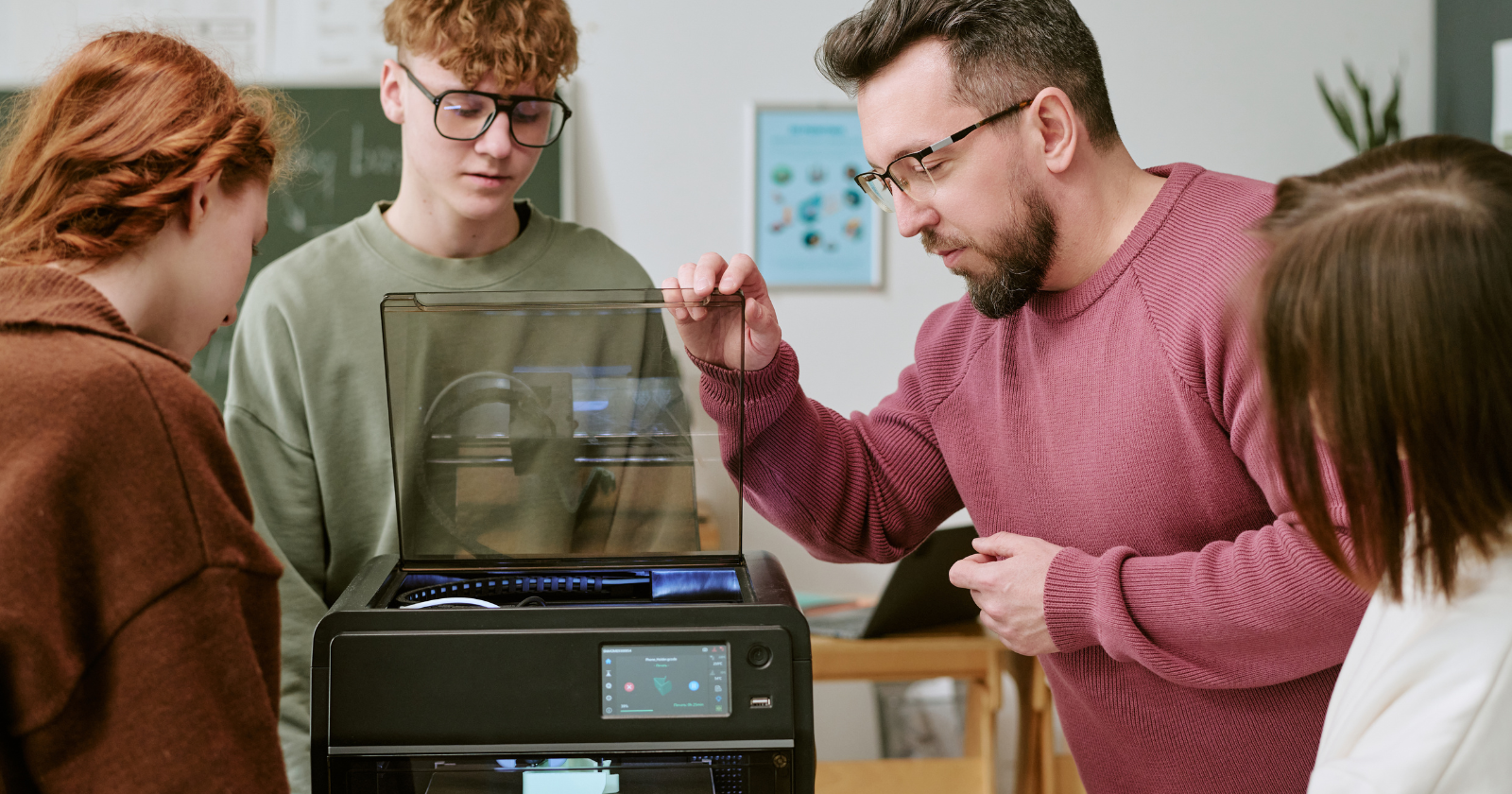
Benjamin Davis, a 16-year-old sophomore at Bishop Feehan High School in Attleboro, Massachusetts, has made impressive advancements in tackling plastic waste produced by 3D printing. Over the last two years, he built a machine in his family’s home in Wrentham that transforms plastic waste into new filament for 3D printers. His groundbreaking project secured him a spot at the 75th Regeneron International Science and Engineering Fair in Columbus, Ohio, in May 2025, making him the first individual from Bishop Feehan to receive a national ISEF award.
Davis’s project, “Pultrusion and Extrusion to Recycle Filament,” was awarded first place in the Engineering Technology: Statics and Dynamics category and one of two Regeneron Young Scientist Awards, each worth $75,000. This award is notable, trailing only the $100,000 George D. Yancopoulos Innovator Award, which is given to only two among nearly 1,700 competitors in 2025.
The recycling system integrates electrical, mechanical, and chemical engineering on a desktop scale. Extrusion melts and molds shredded plastic into filament, while pultrusion, commonly associated with creating rigid composite components, assists in fabricating stronger filament. According to Davis, his system operates about 45% more efficiently than similar home recycling machines and is approximately 90% more economical compared to commercial options. Crucially, the interface is designed for accessibility, attractive to individuals without engineering expertise.
The machine targets waste specific to 3D printing, where as much as 67% of filament can become waste from failed prints, support structures, and purge material. It aims to recycle purge waste and discarded PET plastic, focusing on applications in workshops, classrooms, or small printing environments, intentionally honing in on a particular rather than extensive waste problem.
Regeneron ISEF, organized by the Society for Science, is a leading international pre-college competition, drawing entrants from 49 U.S. states and over 60 additional regions. Davis’s project was assessed with others based on creativity, innovation, and scientific thoroughness.
Future plans for his design involve creating a machine suitable for high-temperature composite filaments and improving the existing prototype for efficiency and potential commercial feasibility. While Davis’s project demonstrates that a student-created machine can effectively and affordably recycle 3D printing waste, it still remains a prototype that requires additional verification and testing for wider application.
This recognition highlights Davis’s skill in pinpointing and engineering a solution to inefficiencies in additive manufacturing. His forthcoming actions will determine whether this prototype achieves commercial success, a path he is clearly ready to embark upon.