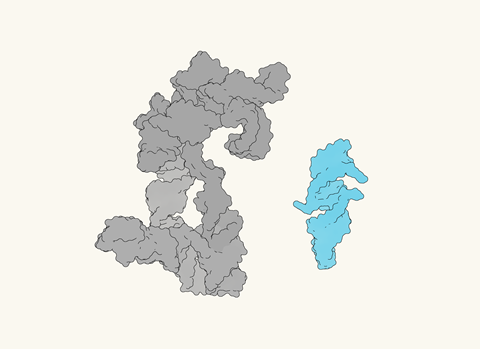
A revolutionary finding has occurred in the exploration of life’s beginnings: a fragment of RNA consisting of only 45 nucleotides has been discovered to be capable of carrying out two essential reactions critical for self-replication. This molecule, a variant of RNA enzyme, offers a captivating perspective on how inanimate chemistry on the primordial Earth might have commenced self-replication and evolution.
Although it does not accomplish self-replication, as the two reactions do not take place in succession or within a single environment, this success signifies a significant advancement towards self-synthesis. This mechanism is characterized by an RNA’s capability to replicate itself and produce its complementary encoding strand, which is unprecedented for a polymerase ribozyme.
RNA enzyme polymerase ribozymes serve as vital catalytic agents that support the RNA world hypothesis, a theory proposing that RNA molecules arose from a primitive chemical mixture, developing the ability to encode genetic information and initiate self-replication reactions in protocells, before the rise of DNA and proteins.
While polymerase ribozymes are not found in known lifeforms, scientists have artificially created them. They are acknowledged for facilitating the synthesis of other RNA molecules, highlighting their crucial role in the origin of life. Nevertheless, their generally lengthy nucleotide sequences and intricate folding structures make spontaneous self-replication on prebiotic Earth unlikely.
Historically, polymerase ribozymes have not shown the ability to self-replicate, leading to the assumption that complex prebiotic chemistry and non-enzymatic replication produced larger, intricate ribozymes. Unfazed, a research group led by Edoardo Gianni at the MRC Laboratory of Molecular Biology in Cambridge, UK, adopted an audacious strategy in search of a new polymerase ribozyme lineage with promising self-replication potential. Through directed evolution on an extensive library of one trillion random RNA sequences, they isolated QT45, a ribozyme that is 45 nucleotides long.
Experiments conducted in eutectic ice— a mixture of water and salts favorable for polymerase activity that may emulate early Earth conditions—revealed that QT45 could both spur the synthesis of its complementary strand and replicate itself, although the latter took 72 days for a mere 0.2% yield.
David Lilley from the University of Dundee recognizes the sluggish catalytic rate but highlights its significance as a crucial step aiding the RNA world hypothesis’ validity. In such a framework, shorter RNA strands would vastly outnumber their longer counterparts. Previous experiments involving spontaneous RNA polymerization on Earth produced fragments up to around 20 nucleotides, sufficient to recombine into RNAs similar to QT45, according to Gianni.
This progress significantly lessens the initial conditions required for non-enzymatic processes before ribozyme-driven replication can thrive. The outcome? A revised and enhanced estimate of life’s natural emergence probability solely through chemical interactions.
The researchers, keen to make further progress, aim to perform both key reactions simultaneously, establishing a self-replicating cycle. Furthermore, they seek to optimize results to promote a self-sustaining, growing, and evolving system.
*Correction: This article was updated on 17 February 2026 to rectify the spelling of Edoardo Gianni’s name, and on 19 February 2026 to amend Holliger’s affiliation.*