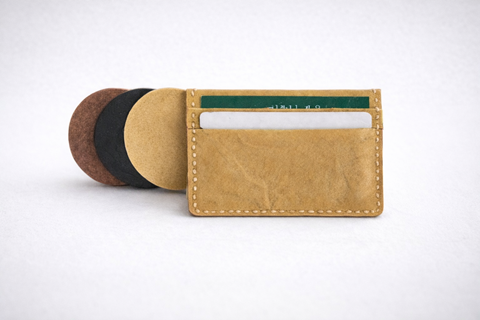
**Revolutionary Method Transforms Wheat Gluten into Plant-Based Leather**
The search for eco-friendly and ethical substitutes for conventional leather has achieved a significant milestone with a novel process that converts wheat gluten into a versatile, water-resistant plant-based leather. This groundbreaking technique utilizes heat and ultraviolet (UV) light to rearrange the inherent protein structure of gluten, creating new connections that improve the material’s characteristics without using synthetic polymers or chemical crosslinkers.
**Expanding Leather Market and Ethical Issues**
The worldwide market for leather products, projected to exceed $500 billion by 2025, is anticipated to keep expanding. Nevertheless, the environmental impact and animal welfare issues linked to traditional leather have prompted investigations into more sustainable alternatives. Previous bio-based leather substitutes often failed to replicate the mechanical properties of natural leather or depended on chemical crosslinkers and water-repellent treatments.
**Innovative Research by South Korean Scientists**
A research group led by Dongyeop Oh at Korea University has developed a technique to convert gluten into a high-quality plant-based leather. The method is akin to bread-making: gluten is combined with water and glycerol to create a film. Gentle thermal processing oxidizes cysteine residues, leading to the formation of disulfide bonds that establish a robust and flexible 3D gluten matrix. Additional high-temperature heating and UV exposure produce compounds like cysteinyl-DOPA, enhancing the material’s water resistance.
**Performance Comparison**
This gluten-derived material exhibits a tensile strength of 10–14MPa and a toughness of 4.6MJ m^-3, surpassing previous gluten-based materials. After tanning with tannic acid and iron chloride, the tensile strength of the material reaches 17.2MPa, approaching the 17.9MPa of animal leather, demonstrating its impressive potential.
**Obstacles and Future Outlook**
Increasing production scale poses challenges, as the method necessitates significant water and plasticiser content, requiring precise drying and plasticiser control. Moreover, utilizing pure gluten could be expensive, and industrial-grade gluten might lead to discoloration due to the Maillard reaction.
The research team, mindful of these hurdles, seeks to standardize the procedure and tackle issues of material biodegradation. With growing interest in plant-based leather in the fashion sector, the commercialization of gluten-derived leather presents a highly promising opportunity. If achieved, this could represent a substantial advancement in sustainable fashion solutions.