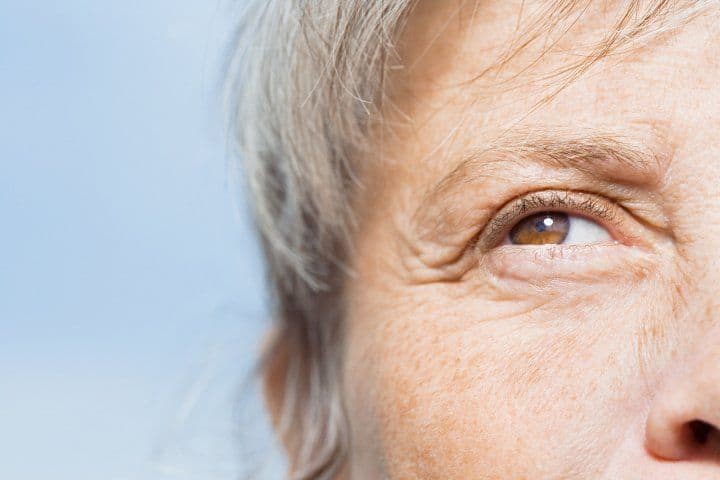
At this very moment, as you peruse these sentences, an unusual phenomenon is occurring within your eyes. Your pupils are constricting, tightening to enhance the clarity of the text displayed on this screen or page, thereby limiting the amount of light that hits your retina. If you’re indoors, which is likely, you might be receiving merely a tenth of the retinal light exposure you would get by looking at a tree line from your backyard. This gradual, silent deprivation of light might be altering the physical composition of your eyeballs.
This, at least, is the intriguing new theory proposed by researchers at the SUNY College of Optometry in New York. In a paper published in Cell Reports, they suggest that myopia, the blurred distant vision currently impacting nearly half of young adults in the US and Europe (and nearly 90 percent in certain regions of East Asia), may not be driven by screens specifically but by something more fundamental: the way our pupils operate when we concentrate on nearby objects in poorly lit rooms.
For decades, it has been acknowledged that close work and limited outdoor activity are somehow connected to the myopia crisis. Children who spend more time reading or bent over tablets often experience greater short-sightedness. Conversely, those who engage more in outdoor play tend not to. Atropine eye drops have been shown to slow the progression of myopia. Multifocal lenses contribute as well. Even merely reducing image contrast can be beneficial. The challenge is that these interventions appear to function through various mechanisms, and no one has effectively clarified why such a diverse set of strategies would all impact the same condition. “Myopia has escalated to near-epidemic proportions globally, yet we still don’t completely comprehend why,” remarked Jose-Manuel Alonso, a neuroscientist at SUNY Optometry who spearheaded the research.
His team believes they’ve identified the connecting thread. And it literally traverses your pupil.
Here’s the fundamental physiology. When you shift your gaze from a distant view to a book in your hands, your eye performs three actions simultaneously: the crystalline lens bulges to refocus the image, your eyes converge inward, and your pupils narrow. Optometrists refer to this combination as the “near response.” The lens adjustment is accommodation, the convergence is vergence, and the pupil constriction enhances depth of focus, much like narrowing a camera aperture. Outdoors, pupil constriction is mainly influenced by brightness. Indoors, when focusing closely, the constriction is instead prompted by the accommodation process itself. And that’s where the issue may begin.
“When individuals concentrate on nearby objects indoors, such as phones, tablets, or books, the pupil can also tighten, not due to brightness, but to clarify the image,” clarifies Urusha Maharjan, the doctoral student who conducted many of the experimental procedures. “In low light conditions, this combination may drastically diminish retinal illumination.”
To investigate this, Maharjan and their team equipped 34 young participants (13 with normal vision, 21 with myopia) with Tobii Pro eye-tracking glasses and an electrically adjustable lens that could switch between clear focus and minus-five diopters of blur in approximately 5 milliseconds. The subjects focused on small bright or dark squares against a glowing background while the lens disrupted their vision, compelling their eyes to accommodate. The team monitored pupil size, eye vergence, and how both variables adjusted over about twenty minutes of repeated focus effort. When stimulus contrast increased from 1 to 100 percent, accommodative eye vergence surged by three to six times. Pupil constriction followed in sync, and the two responses were closely related. Most remarkably, the longer the subjects maintained accommodation, the more intense both responses became, a temporal potentiation that was significantly more evident in the myopic individuals (the statistical interaction between group and time was, to put it mildly, compelling: p = 1.7 × 10⁻³¹ for vergence).
What does this imply in practical terms? Alonso’s team analyzed the retinal illumination data. In bright sunlight, around 1000 lux, even a fully constricted 2-millimeter pupil allows enough light to deliver approximately 1000 trolands to the retina. However, indoors under a standard 100 lux reading lamp, with that same 2-millimeter pupil, retinal illumination plummets to merely 100 trolands. An order of magnitude less.
The hypothesis, therefore, is that this persistent deficit in retinal light diminishes the efficacy of ON retinal pathways (the circuitry that reacts to light onset) and that this decline somehow prompts the eye to elongate, resulting in myopia. It’s a singular mechanism that could, in theory, explain why so many seemingly unrelated approaches are effective. Atropine