Methanol Generation through Plasma Zapping: An Eco-Friendly Innovation
Scientists at Northwestern University have created a groundbreaking technique for generating methanol by electrically zapping methane. This cutting-edge plasma-driven method utilizes water and a copper oxide catalyst under ambient conditions, removing carbon dioxide emissions and providing a more sustainable option compared to traditional techniques.
Conventionally, methanol is synthesized from methane via an energy-demanding two-step process, requiring high temperature and pressure to first produce syngas, followed by catalysis to convert syngas into methanol. This approach is not only energy-intensive but also contributes significantly to carbon dioxide emissions.
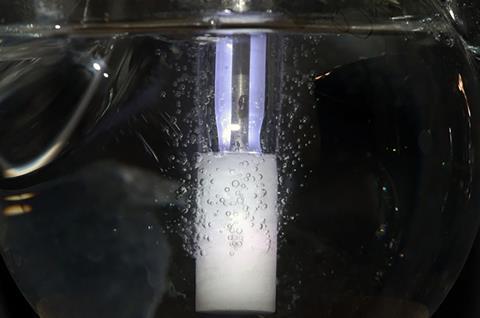
The innovative technique, investigated by Dayne Swearer’s team, streamlines methanol production through plasma chemistry. The process entails exposing methane gas to high-voltage electrical pulses, generating a plasma that partially ionizes the gas. This plasma, when introduced into water within a reactor equipped with a copper oxide catalyst, leads to methanol generation at about 40% yield from a straightforward setup.
To enhance the reaction, a reactor was engineered to manage the chemistry, allowing methane plasma to engage with a copper oxide catalyst and deionized water through a diffuser. This arrangement effectively inhibited overoxidation and subsequent decomposition into carbon dioxide, stabilizing methanol.
Lead author James Ho emphasized the importance of the reaction environment in attaining these outcomes, pointing out the catalyst’s function in stabilizing crucial reactive intermediates. Tests also indicated that adding argon to the reaction boosted methanol yield and selectivity, achieving nearly 97% in the liquid phase, alongside minimal byproducts such as ethylene and propane, with no carbon dioxide generated.
Despite the promising selectivity and energy efficiency, requiring only 46.7kW/h for each kilogram of methanol, scalability poses a challenge. While the method indicates potential for decentralized production, especially at locations with underutilized methane, additional optimizations are needed before it can contend with large-scale industrial methods. This advancement highlights the potential of effectively integrating catalysts in plasma environments to efficiently utilize transient reactive species.