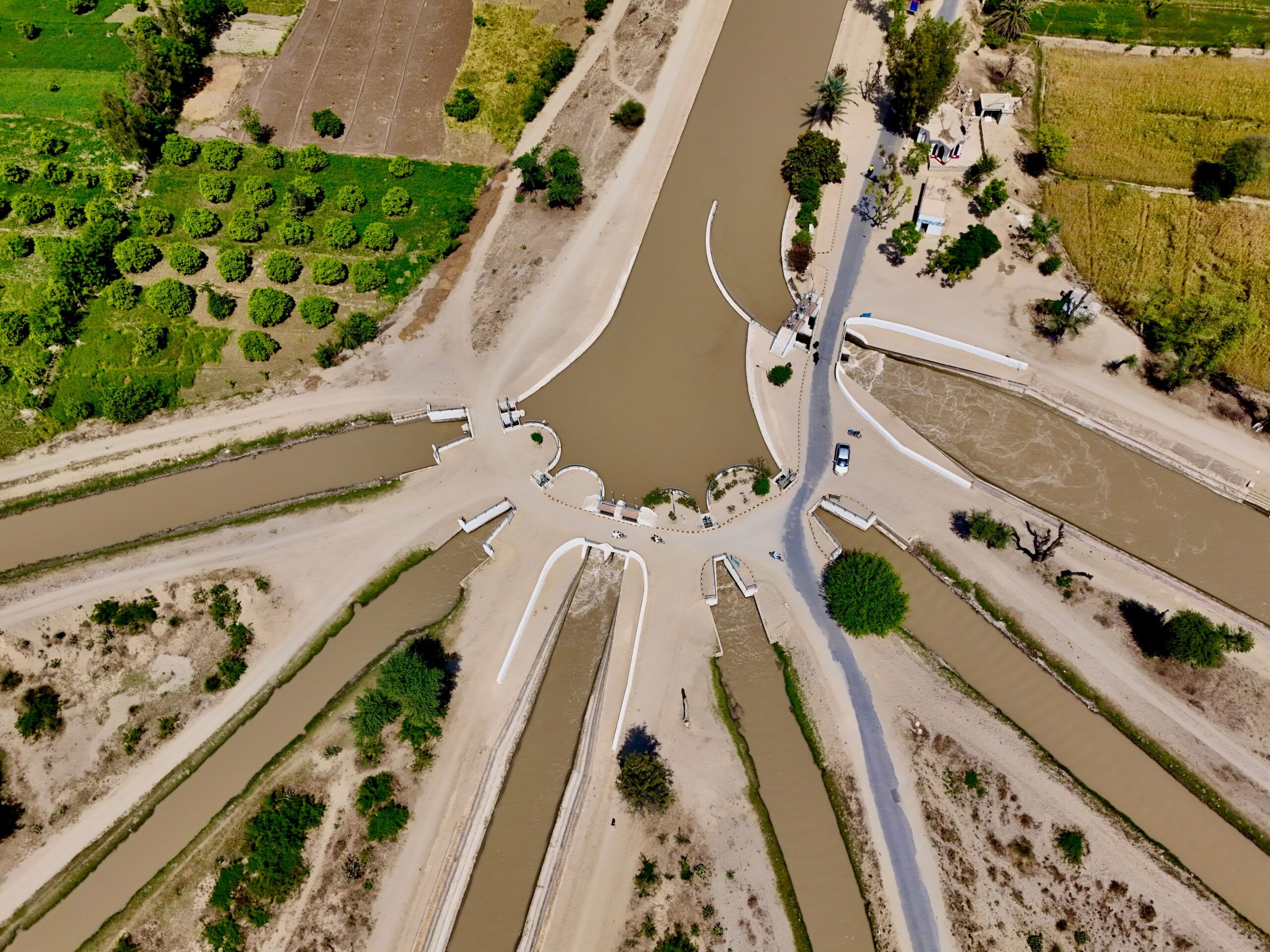
In 2025, California finalized two solar-canopy projects as part of Project Nexus over operational irrigation canals, delivering over 1.6 megawatts of electricity capacity. The project is designed to investigate the prospects of multi-functional infrastructure that produces energy, conserves water, and protects agricultural land. However, the notable estimate of 63 billion gallons of annual water savings originates from a 2021 model that encompasses roughly 6,350 kilometers of California’s primary canals, rather than from the two test locations.
The Pilot Program: Various Canal Installations
Situated within the Turlock Irrigation District in California’s Central Valley, Project Nexus includes two major installations that contribute more than 1.6 megawatts to the district’s energy mix. The initial installation spans a canal 20 feet wide and commenced operations in March 2025. The second, which covers a broader 115-foot channel, began functioning in August 2025. These diverse installations provide practical data and help address engineering challenges such as span length, wind resistance, and access for maintenance.
This project received $20 million in funding from the California Department of Water Resources in 2022 and involves collaboration among TID, UC Merced, and Solar AquaGrid.
Expected Water Savings from Statewide Canal Coverage
The anticipated water savings, modeled by Brandi McKuin and her team from UC Merced and UC Santa Cruz, is founded on simulations that compare canal-top solar installations with conventional land-based systems across about 6,350 kilometers of California’s major canals. The model approximated average yearly evaporation savings of 39,000 cubic meters per kilometer, equating to around 63 billion gallons (approximately 240 billion liters) shielded from evaporation each year. This volume could potentially provide for over two million residents or irrigate 50,000 acres of farmland. However, these estimates are theoretical and contingent on several factors.
The research also anticipated a potential solar capacity of around 13 gigawatts if properly scaled. Project Nexus acts as a test case, rather than a statewide demonstration, accounting for roughly 1.6 megawatts—considerably less than the estimated statewide capacity.
Shared Advantages of Canal-Top Solar Installations
Typically, solar panels experience reduced efficiency as temperatures rise. Canals, remaining cooler due to evaporation, might enhance panel efficiency. On the other hand, solar panels can diminish canal evaporation and prevent the growth of aquatic weeds. Yet, performance fluctuates based on factors like panel design, water clearance, and local environmental conditions.
While not groundbreaking, this setup follows earlier endeavors such as Gujarat, India’s canal-top solar initiative, indicating that energy can be generated above canals without interfering with farmland.
Verifying Model Predictions with Actual Installations
The variability in canal characteristics like width, weather conditions, maintenance requirements, and closeness to power connections complicates the performance of canal-top solar panels. Thus, Project Nexus is outfitted with monitoring technologies to collect data on electricity production, evaporation rates, and canal conditions.
This pilot is structured to validate theoretical models and pinpoint practical challenges. Outcomes from the two sites will aid in comprehension, but broader insights will necessitate data from a more extensive range of canal conditions.
Assessing Costs and Benefits of Canal-Top Solar
Although canal-top solar projects conserve land, they require sturdier structures than ground-mounted systems, creating construction and maintenance obstacles. Financial evaluations, such as those from the Nature Sustainability model, emphasize that potential advantages surpass costs due to land savings, water conservation, and lower maintenance demands. Nevertheless, these advantages depend on site-specific financial circumstances, including variations in material costs, water values, and regulatory elements.
Project Nexus seeks to convert a theoretical model into a practical application, examining real-world performance data on water conservation, improved electricity generation, and related costs, thus bridging the divide between theory and practice.